Falling for Death: The Grim Reaper as Love Interest
Why grim reaper romance hits hard: the forbidden line, the ticking clock and the gentle reaper, plus Korea's jeoseung saja and a convenience-store love story.
He's tall, he's tired, he wears black, and he already knows the exact date you're going to die. On paper, Death is the worst possible boyfriend. In practice, grim reaper romance is one of the most addictive setups in supernatural comics, and it isn't hard to see why once you look at what the trope is really built from.
Take away the cloak and the scythe and a reaper love story is made of four simple, powerful parts: a line that must not be crossed, a clock that won't stop, a guardian who turns out to be soft, and a mortal heroine whose every ordinary day suddenly matters. Here's how each one works, how Korea's reapers differ from the Western image, and where to read one right now.
Why Death makes a great love interest
1The forbidden line: the living and the dead aren't supposed to touch, so every small kindness feels like a rule being broken.
2The countdown: a fixed date turns a slow burn into a race.
3The gentle reaper: the scariest figure in the room turns out to be the most careful.
4Mortality raises the stakes: when time is short, a shared snack at 2 a.m. is a love confession.
Two kinds of reaper: the Grim Reaper and the jeoseung saja#
The figure most Western readers picture is the Grim Reaper: a lone skeleton in a hooded black cloak carrying a scythe, a personification of Death itself that took shape in late-medieval European art. He isn't a character so much as a force. He doesn't negotiate, and he doesn't have a favorite snack.
Korean folklore has the jeoseung saja, literally "messengers of the afterlife." They aren't Death itself. They're more like officials of the underworld, often traveling in groups, who come to escort a soul once its time is up. Modern comics and dramas usually dress them in a black gat (the traditional wide-brimmed horsehair hat) and dark robes, or update them into pale men in sharp black suits. There's even a gentle funeral custom, sajabap, where a small meal is set out for the messengers so they'll treat the departed kindly. Feeding your reaper, it turns out, is an old idea.
Western Grim Reaper
▸ One figure: Death personified
▸ Skeleton, hooded cloak, scythe
▸ Inevitable and silent
▸ Romance means seducing Death itself
VS
Korean jeoseung saja
▸ Messengers who escort souls
▸ Black gat and robes, or a black suit
▸ Bound by the underworld's rules and records
▸ Romance means a civil servant breaking protocol
That second version is the one that has taken over modern romance, because a messenger has something Death doesn't: a boss. A reaper with paperwork, rules and superiors can get in trouble, which means he can choose to. For the full tour of reapers, dokkaebi and nine-tailed foxes, read our guide to Korean folklore in comics.
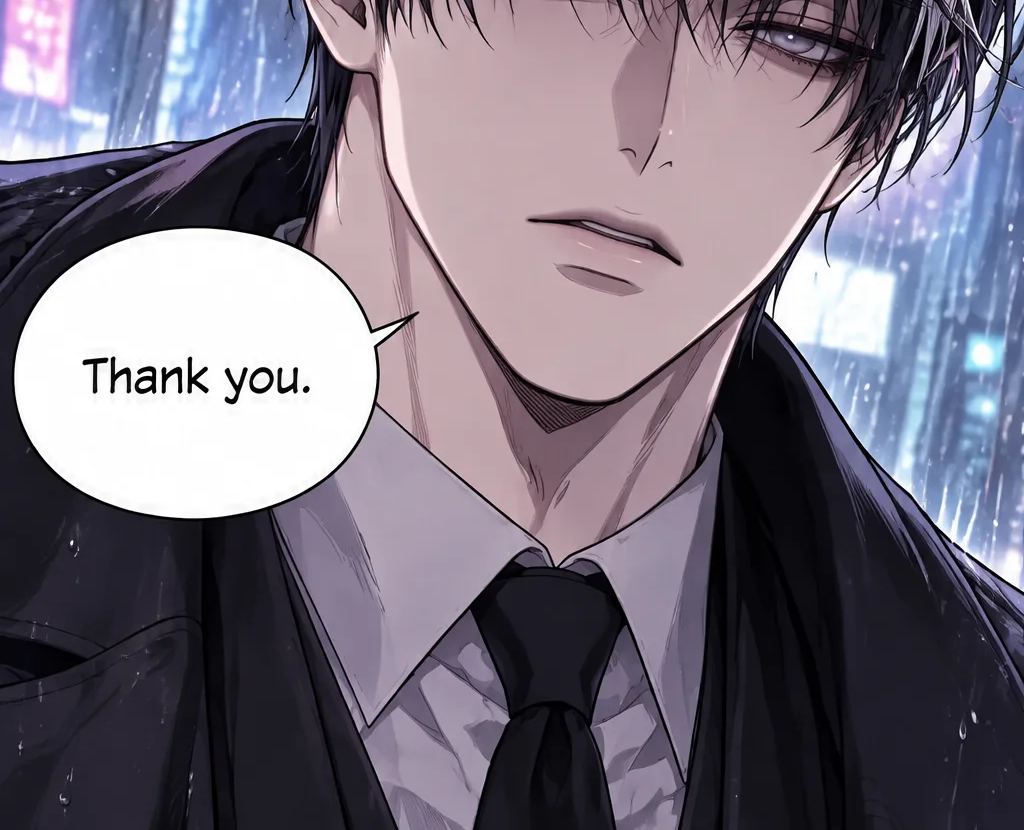
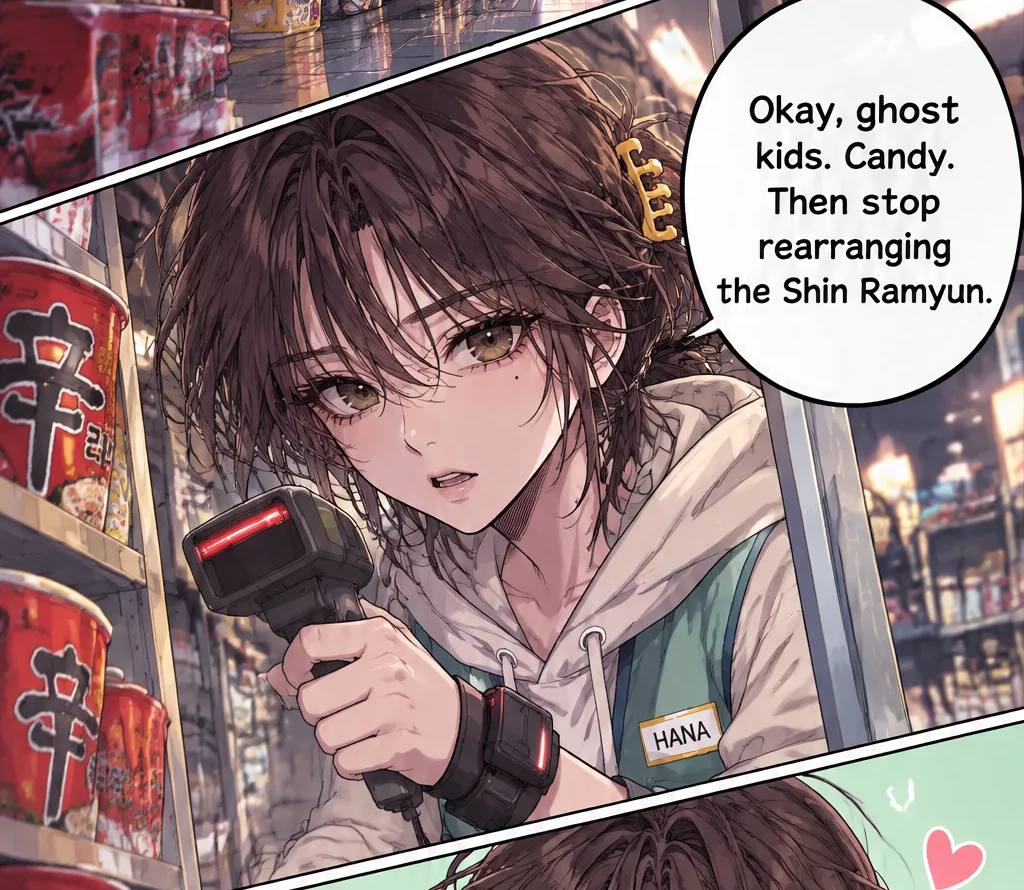
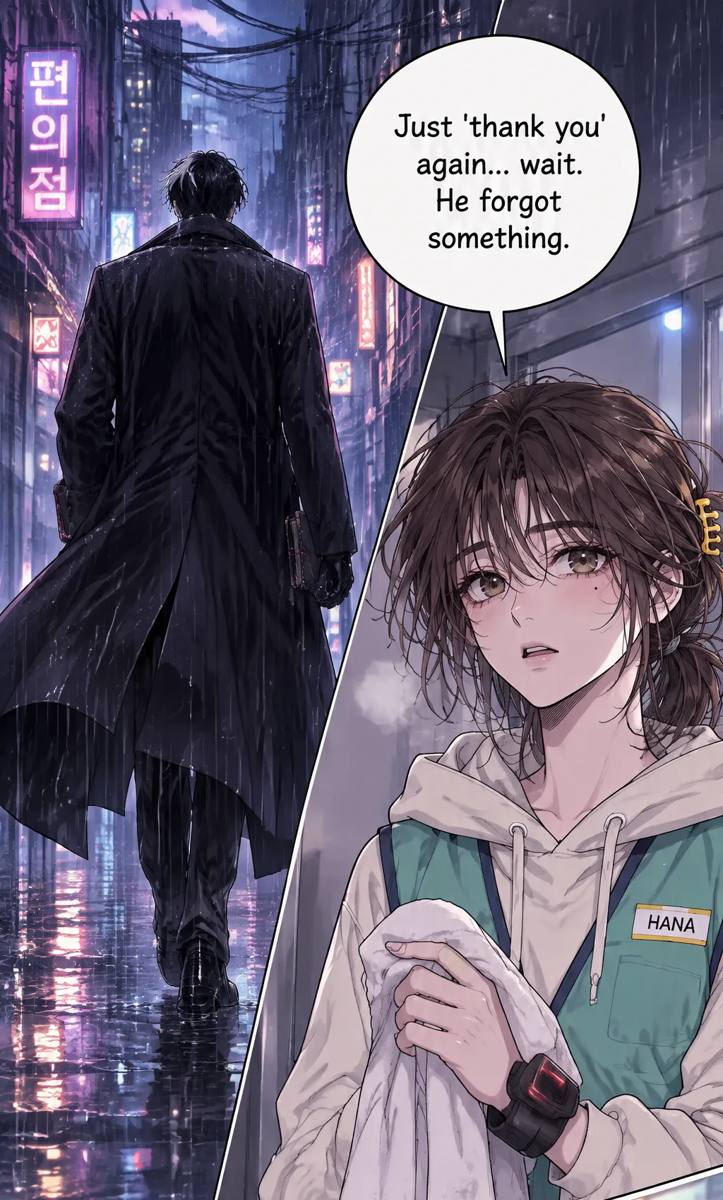
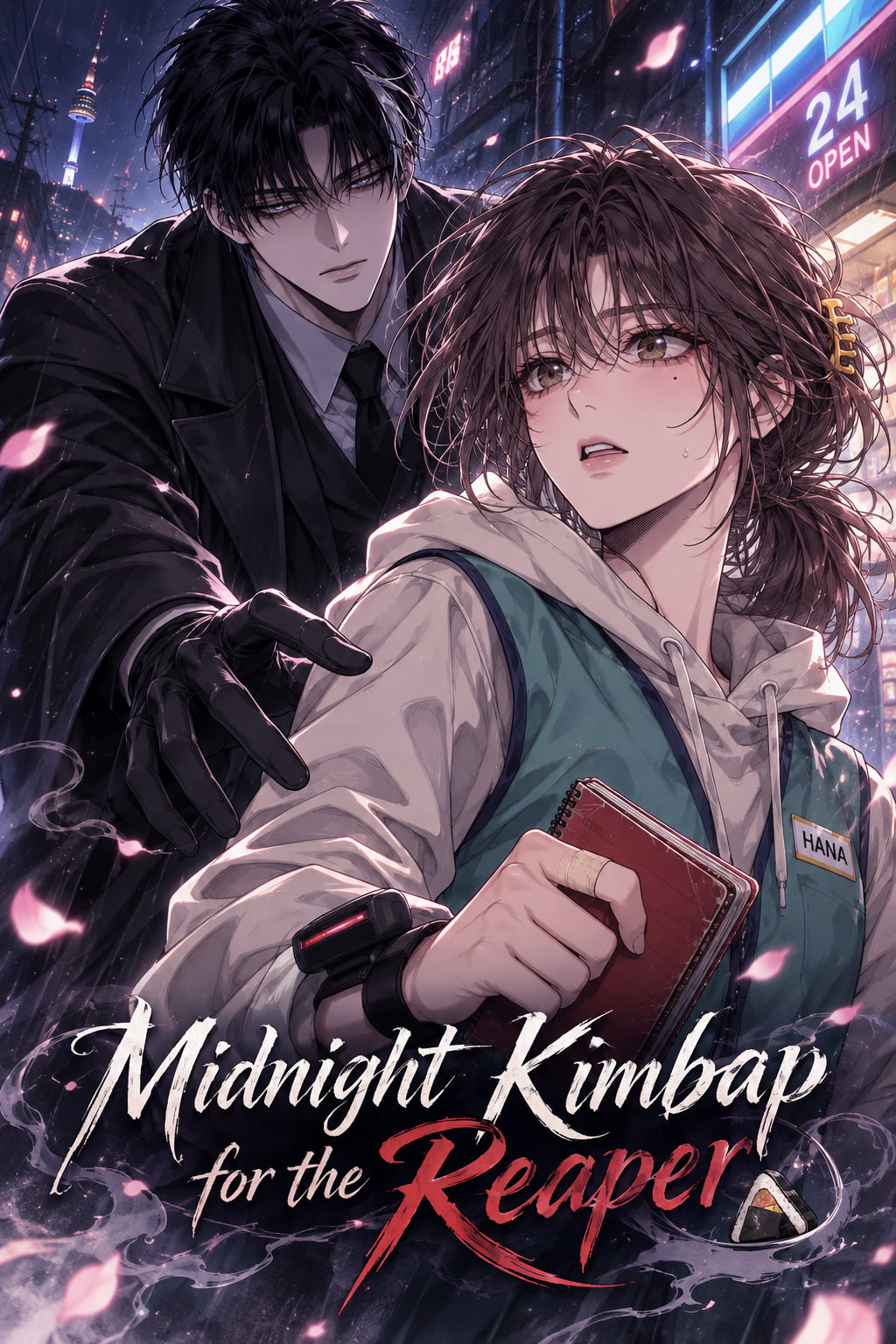
Seo-jin: black suit, rain-soaked coat, and very few words.Hana: mint vest, wrist scanner, and no patience for ghost kids.
The forbidden line: a reaper romance that starts at the counter#
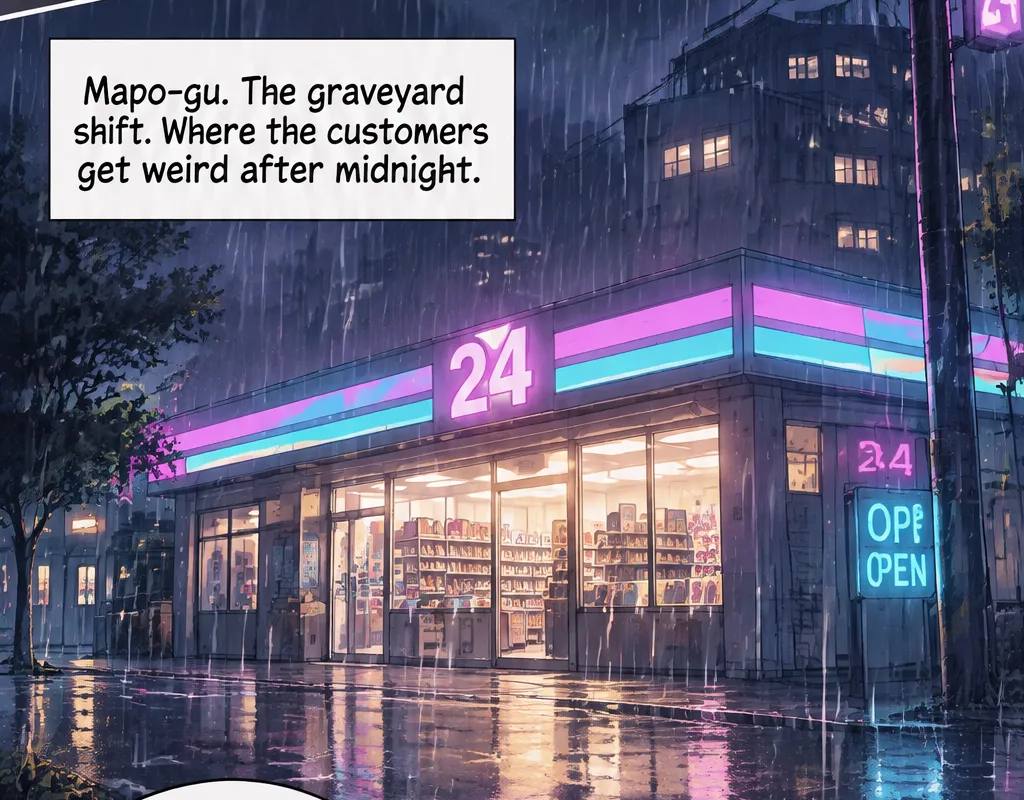
In Midnight Kimbap for the Reaper, the old gods of Korean folklore never left Seoul. They just got day jobs. Kang Hana works the graveyard shift at a 24-hour convenience store in Mapo, where the customers get strange after midnight: a grandmother paying in Joseon-era coins, a man with no reflection, giggling from the ramen aisle.
The setting does half the romance: a warm, buzzing box of light on a cold, rainy street.
Then there's Yeon Seo-jin, a six-hundred-year-old jeoseung saja in a black three-piece suit, who buys one tuna-mayo triangle kimbap at 2:13 a.m. every night and never says more than "thank you." That's the forbidden line in its quietest form. He isn't supposed to linger. She isn't supposed to notice. They both do anyway.
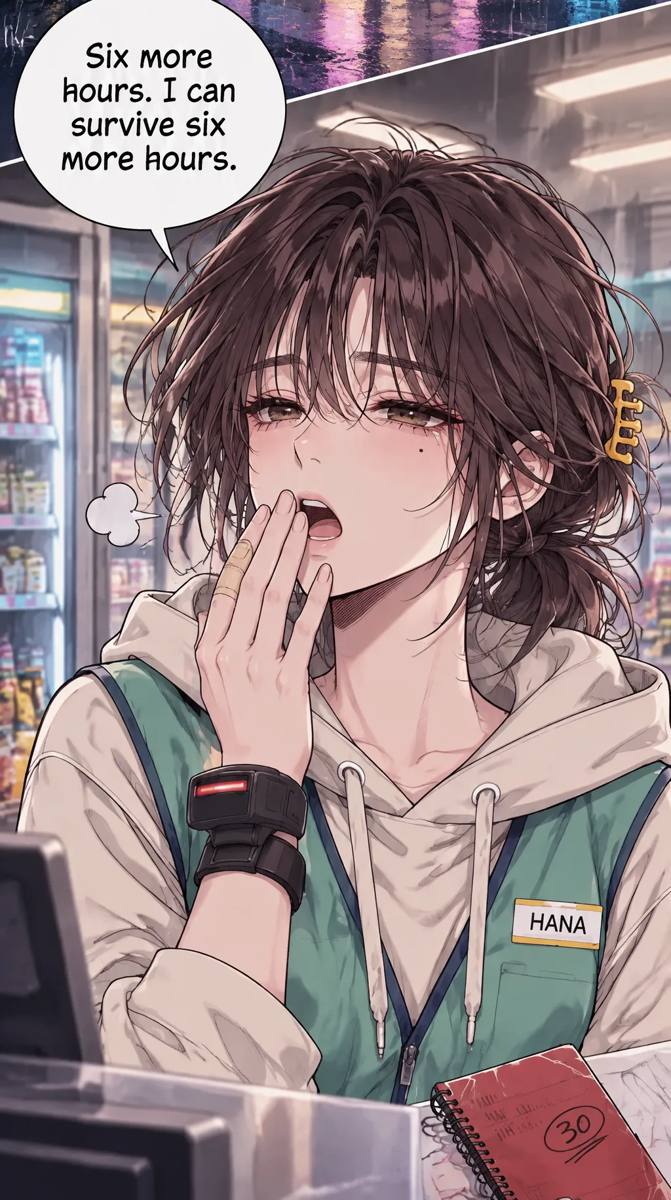
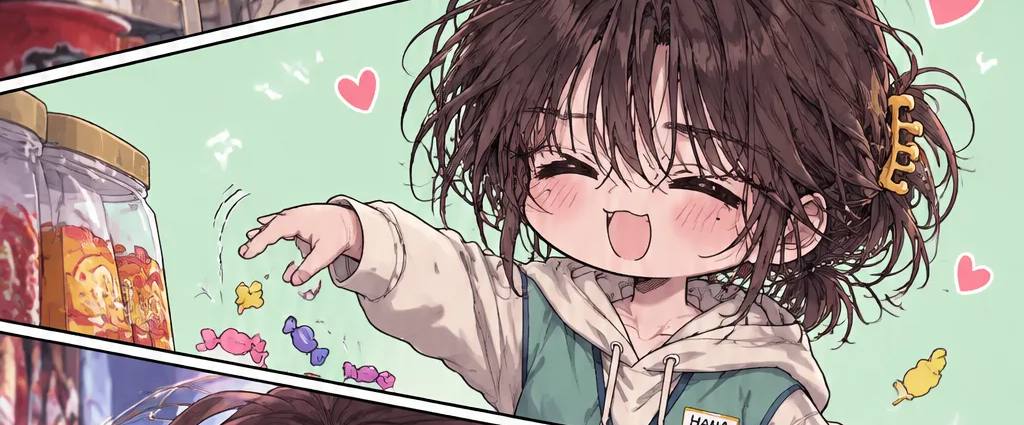
Hana's night shift: survival yawns, candy bribes for the ghost kids, and one customer who always leaves too soon.
Hana's reaction to the supernatural is what makes her so easy to root for. She doesn't scream. She sighs, sets house rules, and leaves candy for the ghost children so they'll stop rearranging the Shin Ramyun. A heroine who treats the uncanny like another difficult customer is exactly the person who could fall for Death without flinching.
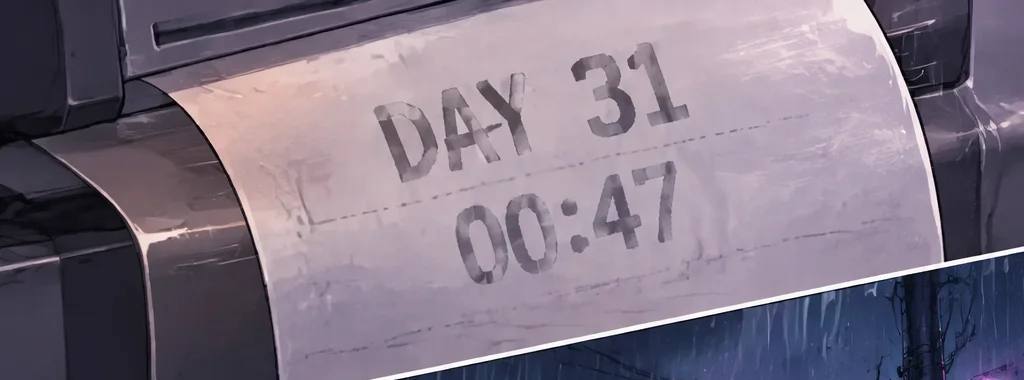
The first episode opens on a receipt, not a face. Before we meet anyone, the story tells us what kind of story it is: a number, and it's going down.
Day 31. The countdown starts before the romance does.
Then Seo-jin leaves his ledger on the counter, Hana opens it, and finds her own name with a date thirty days away. From there, every chapter counts down one more night. A deadline is the best friend a slow burn ever had: it keeps the pace tender without letting it drag, because both leads, and the reader, can feel the days going.
Hana keeps her own count in a cheap red notebook. Thirty days, handwritten.
D-30
Thirty nights. Thirty kimbaps. One rule he's never broken.
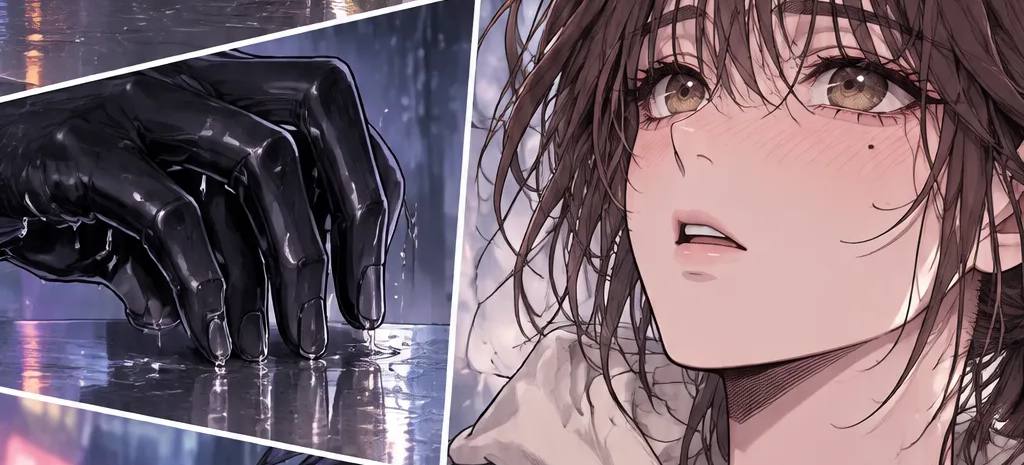
The best part of the trope is the flip. The figure meant to be cold and final turns out to be the most careful person in the story. Seo-jin isn't menacing; he's bone-tired, soaked from the rain, and painfully polite. The romance lives in tiny details: the drip of water off a black glove, the blush when she offers him a towel.
Six months of 'thank you.' The story makes you watch the gloves, and her face, instead of the words.
Kang HanaYour gloves are soaked... do you want a towel?
Yeon Seo-jinThank you.
That restraint is why the gentle reaper is so swoon-worthy. When a man who has collected souls for six centuries without bending a single rule starts swapping shifts and forging records, as the series promises he will, every broken rule reads like a love letter. If quiet, tired, devoted leads are your weakness, he's in good company in our ranking of the most swoon-worthy male leads.
A reaper romance asks the oldest question in fiction: what would you do with the time you have left? The synopsis is clear that Hana's answer is to live loudly. That's why grim reaper stories so often feel cozy instead of bleak. When the end is written down, ordinary things glow: a warm store on a rainy night, a snack bought at the same minute every evening, a towel nobody used.
“Six months of 'thank you.' Never one word more.
— Midnight Kimbap for the Reaper, episode 1
Spoiler
The series hints that Hana's name in the ledger may not be a clerical error. Someone wrote it there on purpose, and Seo-jin is willing to bargain with gods who don't forgive to find out who.
Midnight Kimbap for the Reaper
He buys the same triangle kimbap every night. Her name is in his ledger. Thirty days left.
Grim Reaper
Korean Folklore
Countdown
Cozy-dark, rain-soaked and funny, with chibi beats between the heartache. Episode 1 is a perfect late-night read.
If the deadline is what hooks you, Toonor has two more romances where the timer is part of the love story. No reapers, but the same ache of falling for someone while the days run out.
Kei Is Not Programmed for This
He was built to charm every customer. He was never built to remember her.
Android
Café
Countdown
Clumsy waitress Tama falls for K-07, a prototype android waiter scheduled to be memory-wiped and returned when the autumn season ends. The clock here isn't death, it's forgetting, which might be worse.
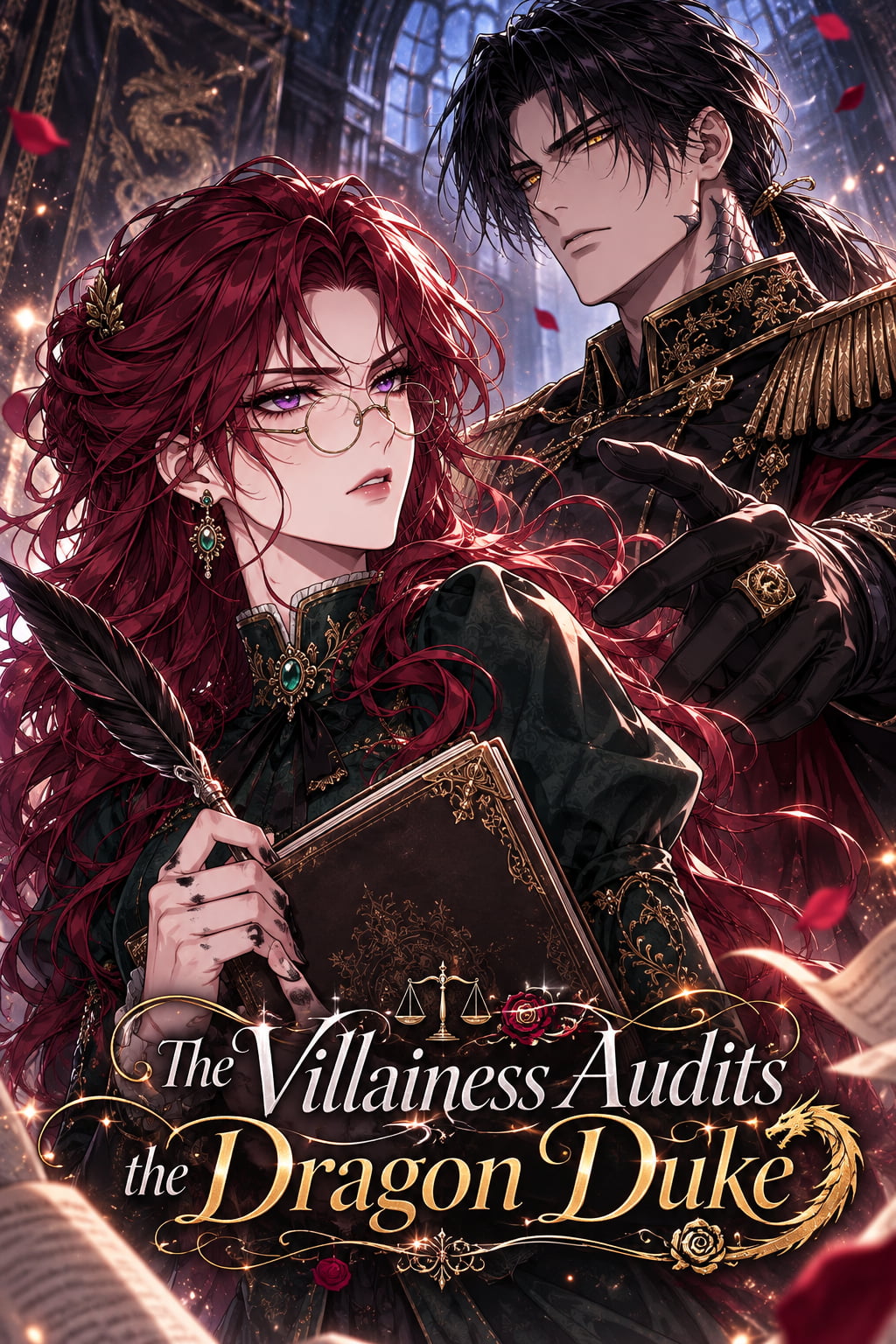
Ninety days to live, one bankrupt dragon, and a ledger that doesn't lie.
Villainess
Contract Marriage
Countdown
A tax auditor wakes up as a villainess due for execution in 90 days, and proposes a contract marriage to the feared dragon duke to survive. Another ledger, another deadline, a much louder heroine.
It's a love story where one lead is Death, or one of Death's messengers, and the other is a mortal. The romance runs on a forbidden line between the living and the dead, usually with a deadline attached.
What is a jeoseung saja?
In Korean folklore, the jeoseung saja are messengers of the afterlife who come to escort the dead to the underworld. Modern comics and dramas usually draw them in a black gat and dark robes, or in a sharp black suit.
Is the grim reaper in Korean stories the same as the Western Grim Reaper?
Not quite. The Western Grim Reaper is a single skeletal figure of Death with a hood and scythe, while the jeoseung saja are more like officials of the underworld, often several of them, who escort souls and follow its rules.
 Myth & Folklore