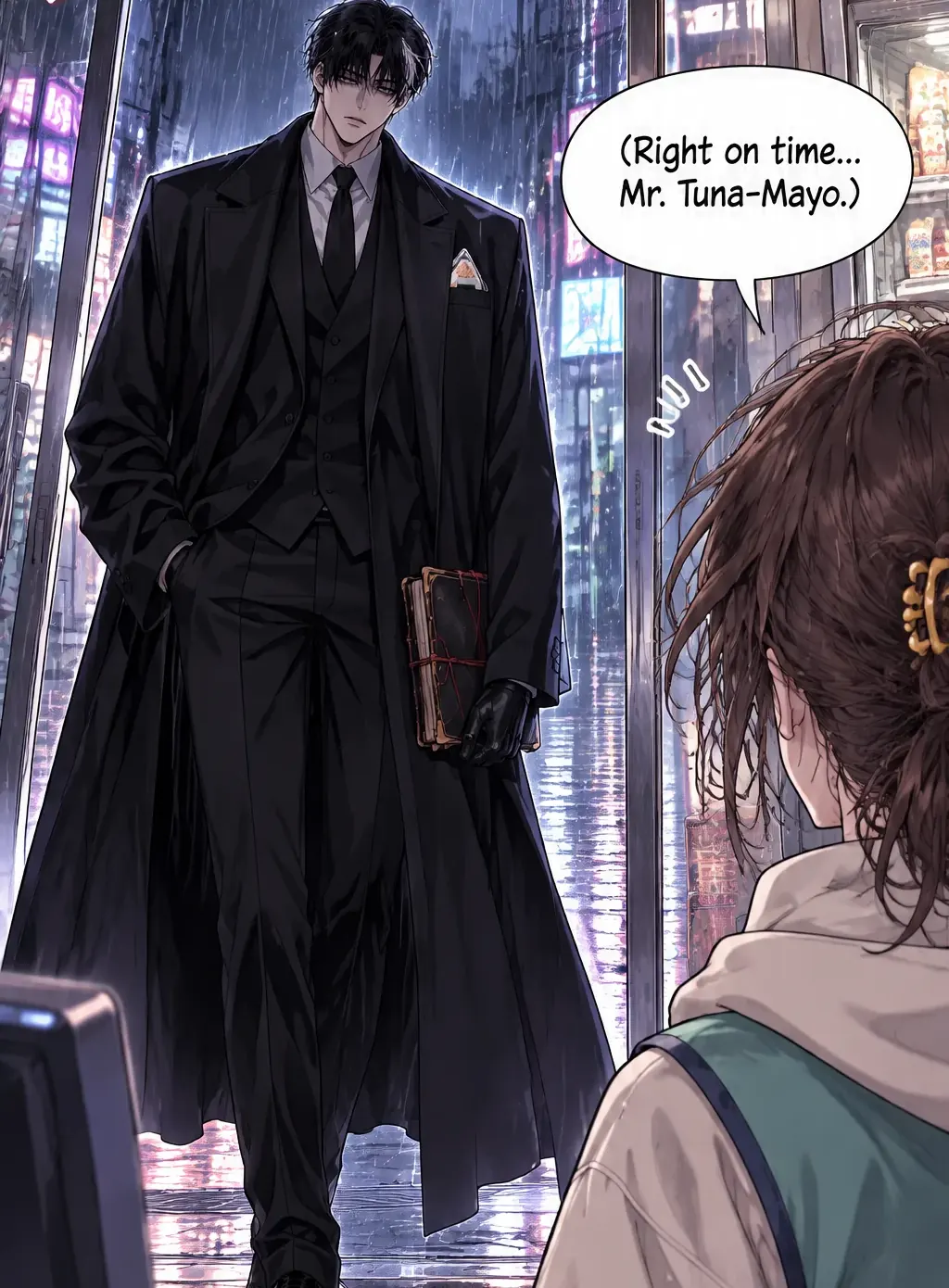
A grim reaper in a tailored suit buys the same tuna-mayo kimbap at 2:13 a.m. A goblin runs a street-food tent. A nine-tailed fox sells lipstick in Myeongdong. Korean folklore manhwa loves dropping very old spirits into very ordinary Seoul, and once you know the myths behind them, every panel gets a second layer.
This is a field guide to the three figures you'll meet most often: the jeoseung saja (the reaper), the dokkaebi (the goblin) and the gumiho (the nine-tailed fox). We'll look at what the old stories actually say, then at how one Toonor original, Midnight Kimbap for the Reaper, puts them on the night shift.
Key takeaways
1The jeoseung saja is the afterlife's messenger: he collects souls and walks them to judgment.
2Dokkaebi are pranksters, not demons. They wrestle, drink, play tricks and sometimes hand out gold.
3The Korean gumiho is a thousand-year fox who takes human form, and she's usually dangerous.
4Modern comics put them in Seoul because a city that never sleeps is the perfect place for spirits to hide.
Korean folklore manhwa: why the old gods moved to Seoul#
Korean folk belief never had one neat rulebook. Shamanic ritual, Buddhist ideas about the underworld and village storytelling all mixed for centuries, so the spirit world was always crowded and a little bureaucratic. There are messengers with paperwork, kings who judge the dead, and household spirits that need feeding.
That mix fits modern urban fantasy perfectly. A spirit world that already runs on ledgers and duties feels right at home among office towers and 24-hour stores. Midnight Kimbap says it plainly in its premise: the old gods never left, they just got day jobs.
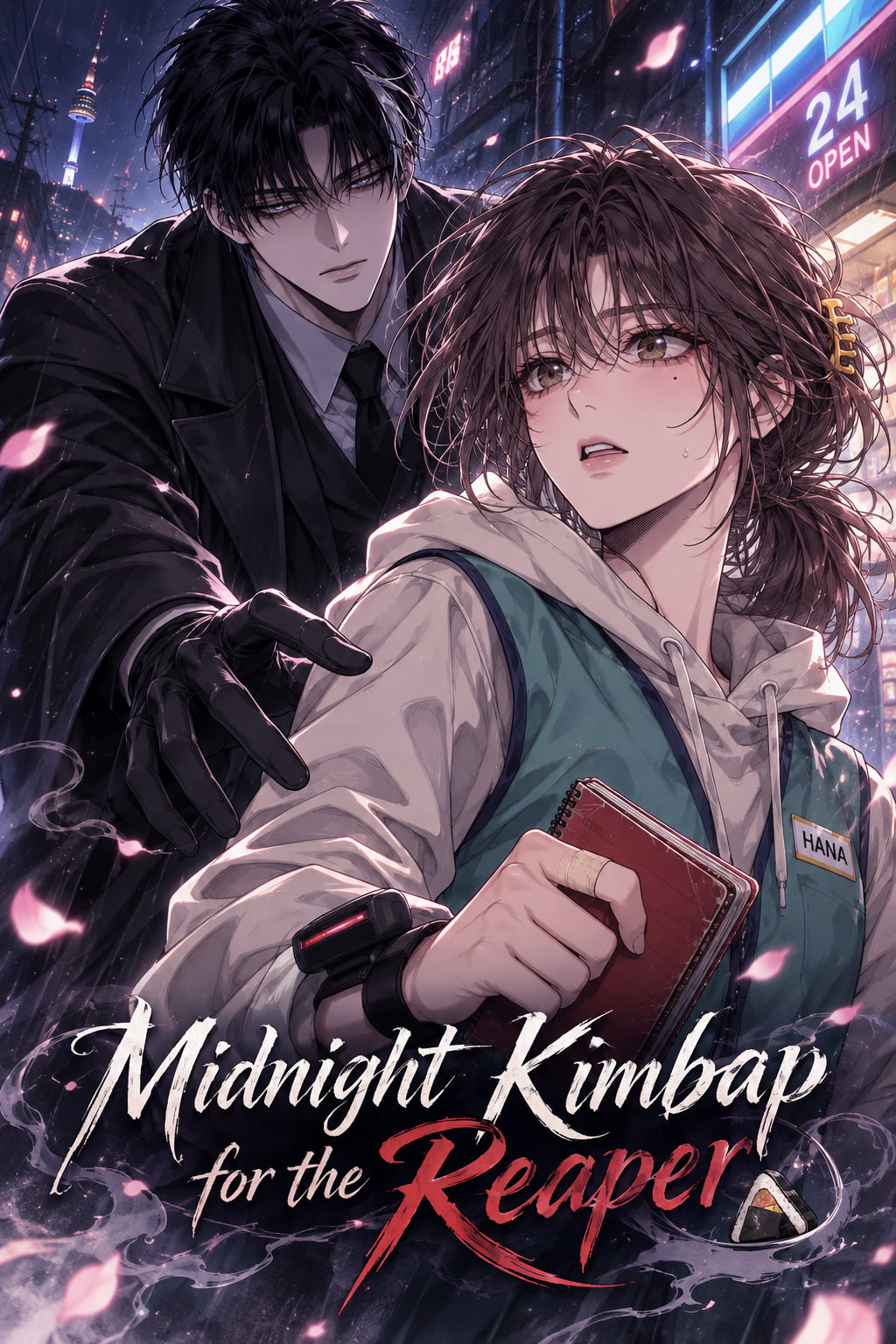
Midnight Kimbap for the Reaper
He buys the same triangle kimbap every night. Her name is in his ledger. Thirty days left.
Supernatural romance
Korean folklore
Grim reaper
Cozy-dark
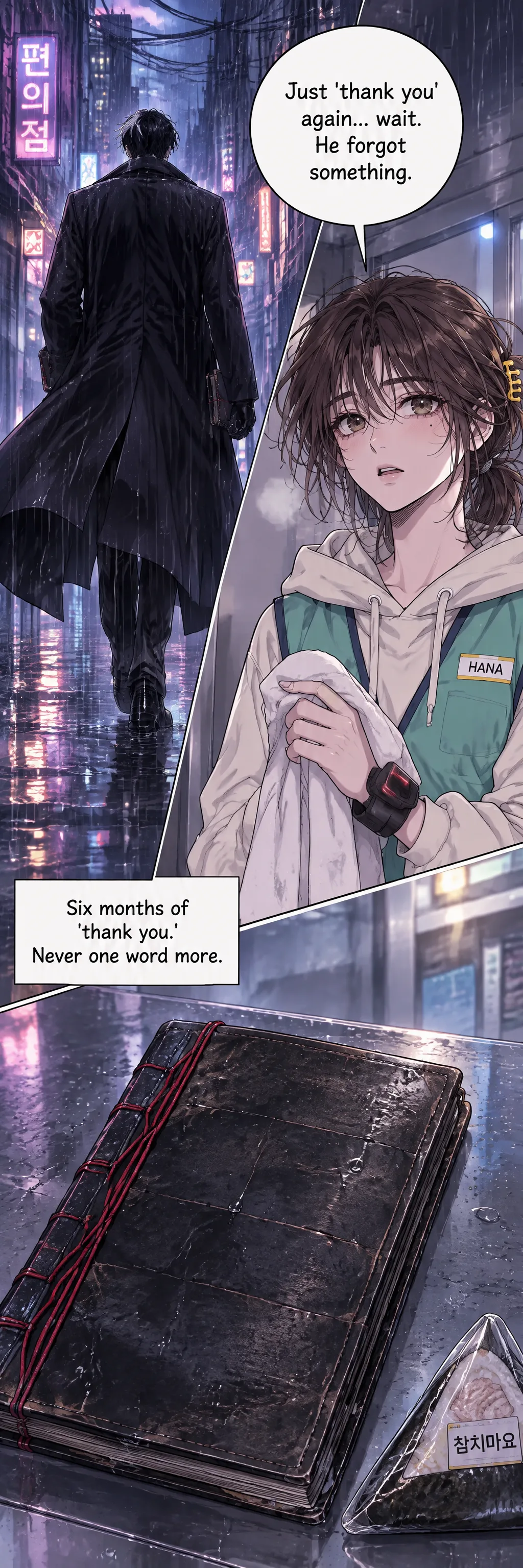
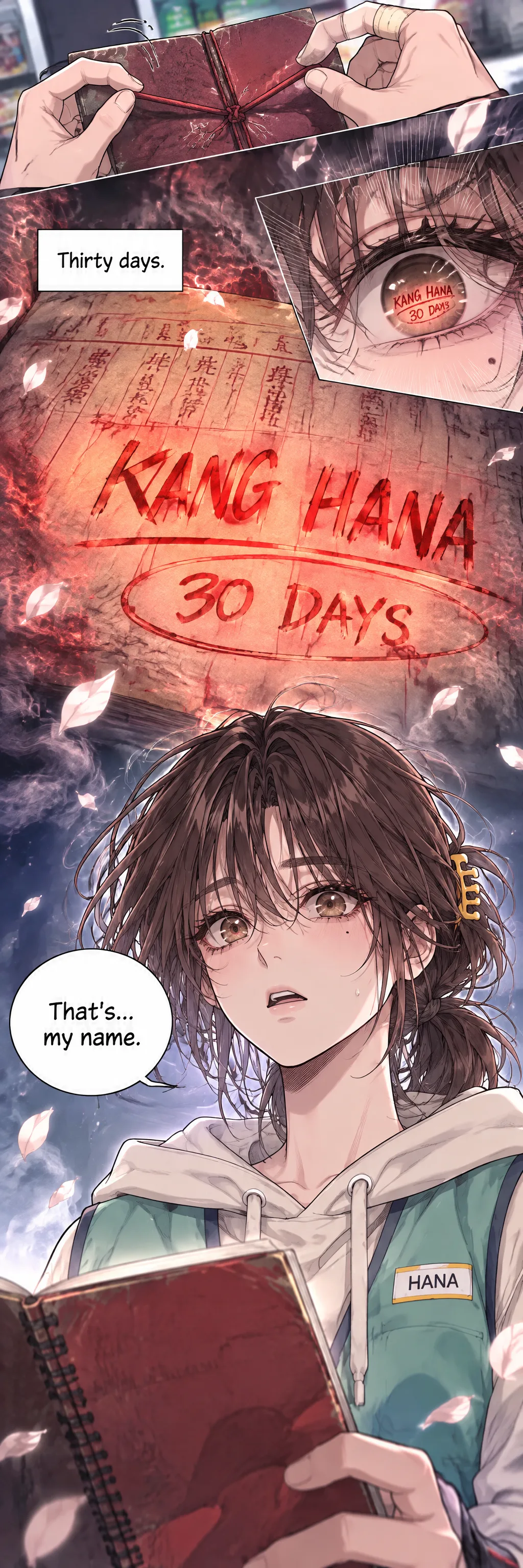
Hana works the graveyard shift at a convenience store in Mapo. After midnight her customers get strange, and the strangest is a quiet man in a black suit who never says more than "thank you." One rainy night he leaves his ledger behind.
Jeoseung means the afterlife, and a saja is a messenger. In Korean belief, when your time comes, messengers from the underworld arrive to escort your soul to judgment before King Yeomra, the Korean name for the Buddhist king of the dead. They aren't villains. They're officials doing a job, and they work from a list of names.
Families took that job seriously. At a traditional funeral, people sometimes set out a small table for the messengers (the sajasang) with bowls of rice, a few coins and straw sandals for the long road. The idea was that a well-fed, well-paid messenger would treat the soul gently. Old tales also love the clerical error: a messenger collects the wrong person, and the soul has to be sent back.
Food for the messenger
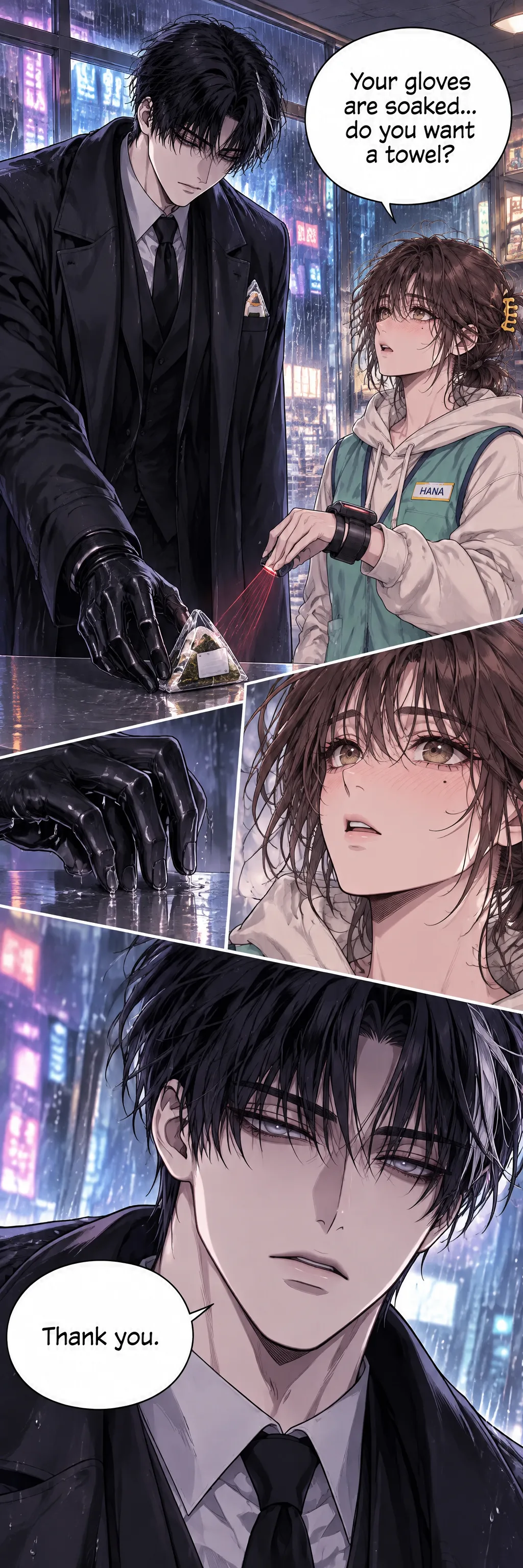
Knowing about the sajasang makes Seo-jin's nightly kimbap run land differently. In folklore, people fed the reaper. In this comic, the reaper is the one quietly buying his own dinner at 2 a.m.
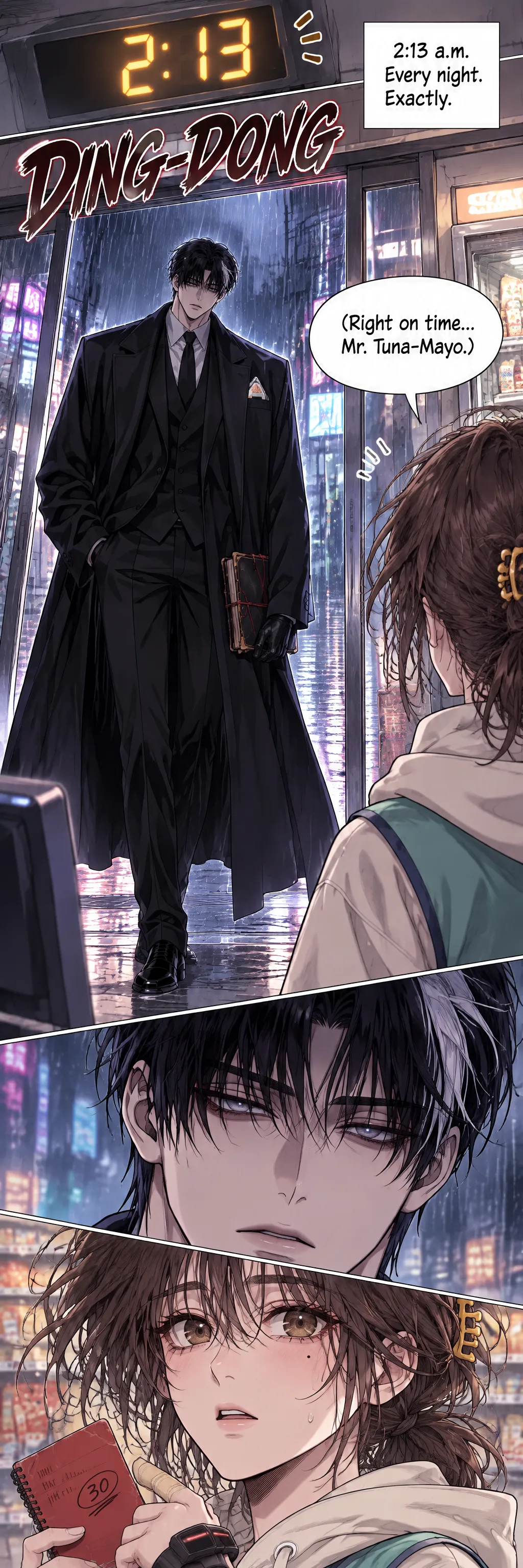
2:13 a.m.: Seo-jin walks in from the rain, kimbap in his pocket and the ledger in his glove.
The black gat and dark robes many fans picture are the reaper's modern pop-culture look, made famous by recent Korean TV dramas rather than by old paintings. Seo-jin trades them for an all-black office-worker suit and a long coat. The worn, red-corded ledger is the folklore detail that drives the whole story.
she opens it
Scroll the 2:13 a.m. visit from episode 1: the door chime, the kimbap, the forgotten ledger and the name inside.
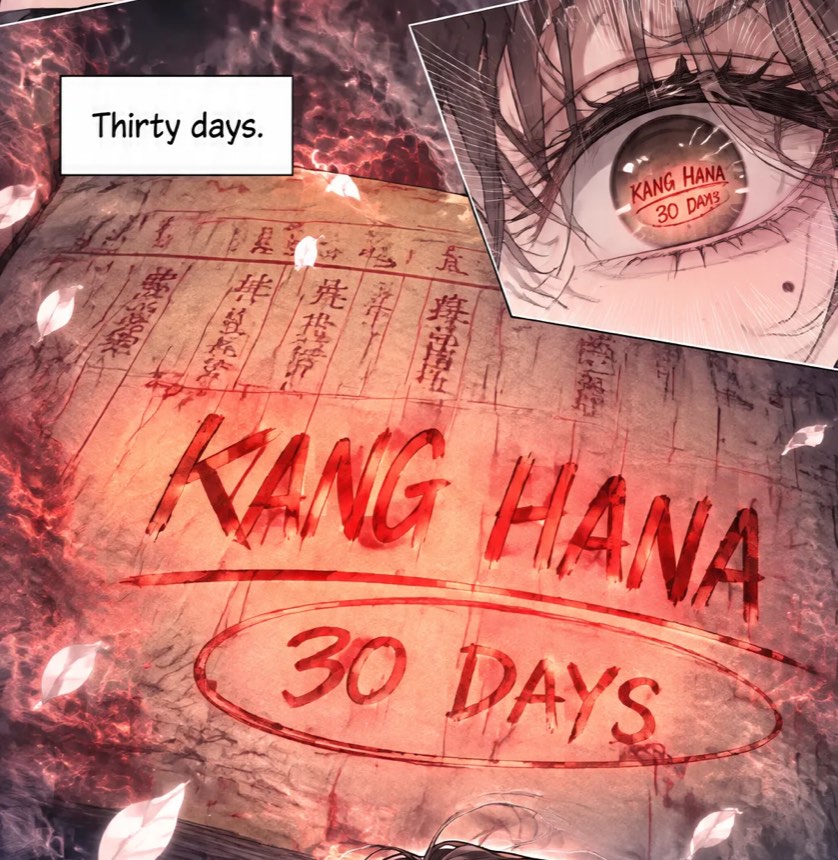
The list every jeoseung saja carries. This one has Hana's name on it.
“That's... my name.
— Kang Hana, episode 1
Love stories about reapers work because the folklore figure already has a built-in conflict: he can't refuse the list. For more on why that makes such a strong love interest, read Falling for Death: The Grim Reaper as Love Interest.
Dokkaebi: goblins who'd rather wrestle than haunt#
Dokkaebi are often translated as "goblins," but they're much friendlier than that word suggests. In folk tales they're rowdy, funny and easy to fool. They challenge travelers to ssireum wrestling, love buckwheat jelly and rice wine, and play tricks on people at night. Some stories say they grow out of old household objects, like a worn-out broom, left alone too long.
Their most famous tool is the dokkaebi bangmangi, a magic club that summons whatever its owner asks for with a tap. In the well-known tale of the old man with the lump, dokkaebi take a kind old man's lump in exchange for gold after hearing him sing. When his greedy neighbor tries the same trick, they give him a second lump. Dokkaebi reward the kind and punish the greedy, so they're closer to tricksters than to monsters.
Doh Baram, the series' comic-relief dokkaebi, is a perfect modern update. He runs a pojangmacha (a street-food tent), so of course he drinks and feeds people for a living. His spiked club is disguised as a giant ladle, and under the loud floral shirt both arms are covered in traditional-pattern tattoos.
About those horns
Older tales describe dokkaebi loosely, often as big, hairy and strange. The horned, club-swinging look many artists use today is a later image. Doh Baram plays with it by hiding the horns under a baseball cap.
A fox that lives a thousand years, the story goes, grows nine tails and gains the power to change shape. In Korean tales the gumiho almost always becomes a beautiful woman, and she is usually dangerous. Many versions say she eats human livers or hearts. Others give her a longing to become fully human, a goal that requires restraint she rarely manages.
Many gumiho stories also feature a yeou guseul, a fox bead holding her power and knowledge. Gu Mi-rae, the series' gumiho, is designed with a glowing pearl pendant. The comic hasn't explained it yet, but folklore fans will notice.
Spoiler
Mi-rae's cast role describes her as the rival who knows who wrote Hana's name in the ledger. She hasn't stepped into the published episode yet, so this is all we know for now.
The nine-tailed fox isn't only Korean. It appears across China, Korea and Japan, and each tradition gave it its own personality:
Korean gumiho
▸ Almost always appears as a beautiful woman
▸ Usually a predator who feeds on humans
▸ Often wants to become human, and rarely gets there
▸ The fox bead holds her power
VS
Japanese kitsune
▸ Can be a trickster, a lover or a guardian
▸ Linked to shrines as messengers of the god Inari
▸ Gains tails and power with age
▸ Often more helpful than hungry
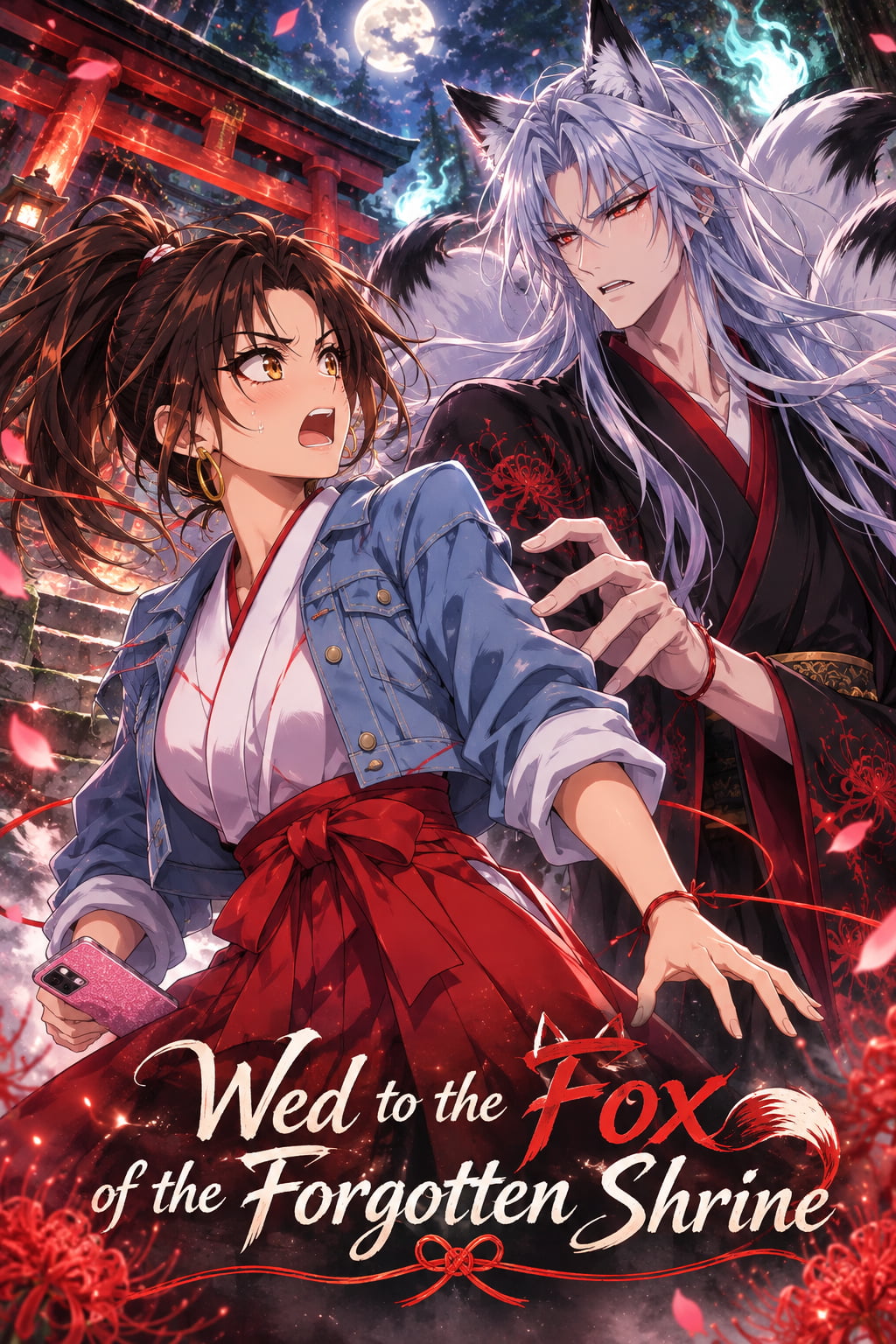
That's why Wed to the Fox of the Forgotten Shrine, another Toonor series, is a contrast rather than a cousin: its fox husband is a Japanese shrine kitsune, not a gumiho. We compare the two traditions in The Nine-Tailed Fox in Anime and Comics.
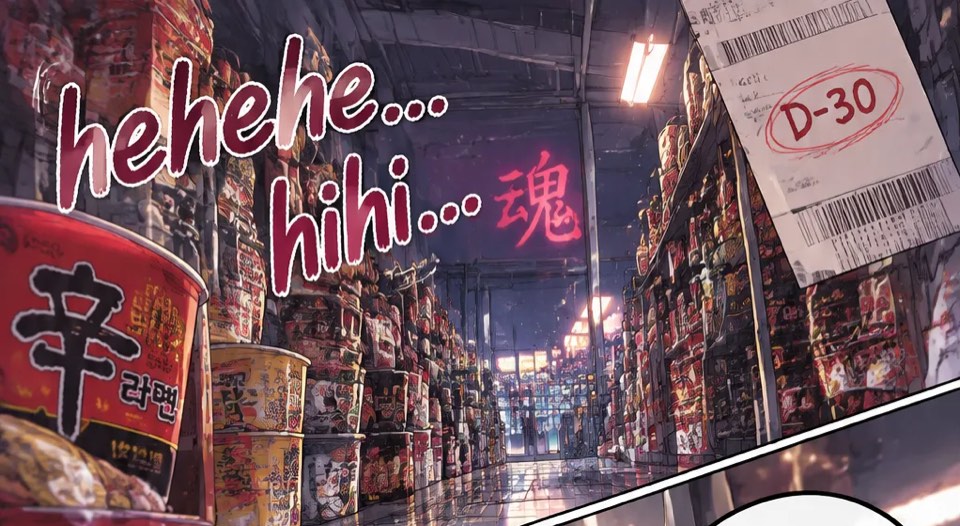
Episode 1 doesn't open with the big three. It opens with smaller hauntings, and each one is drawn as a joke Hana has clearly handled many times before.
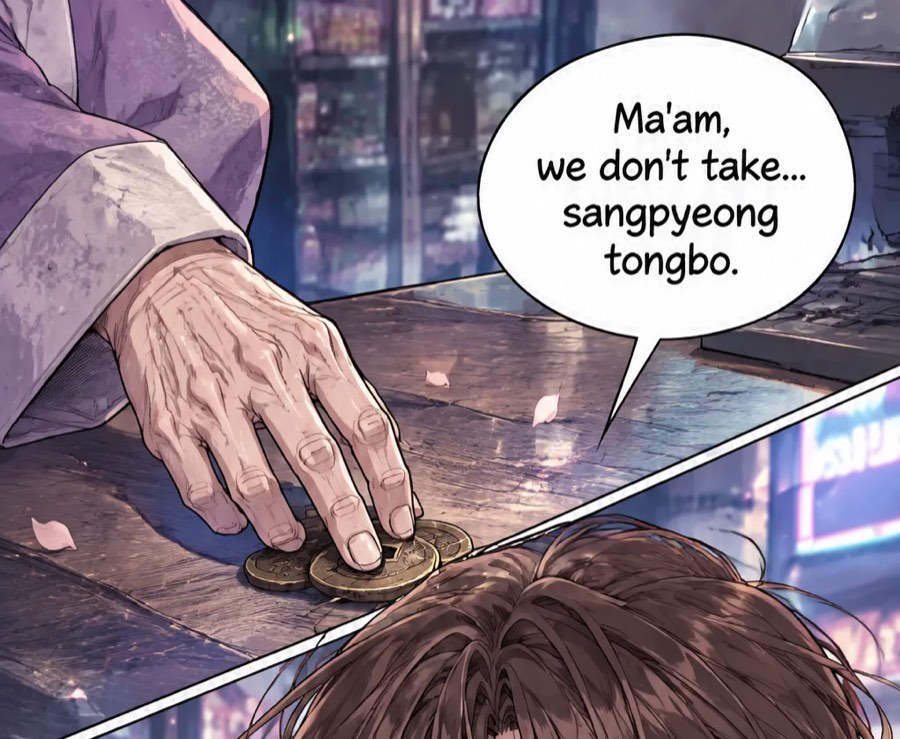
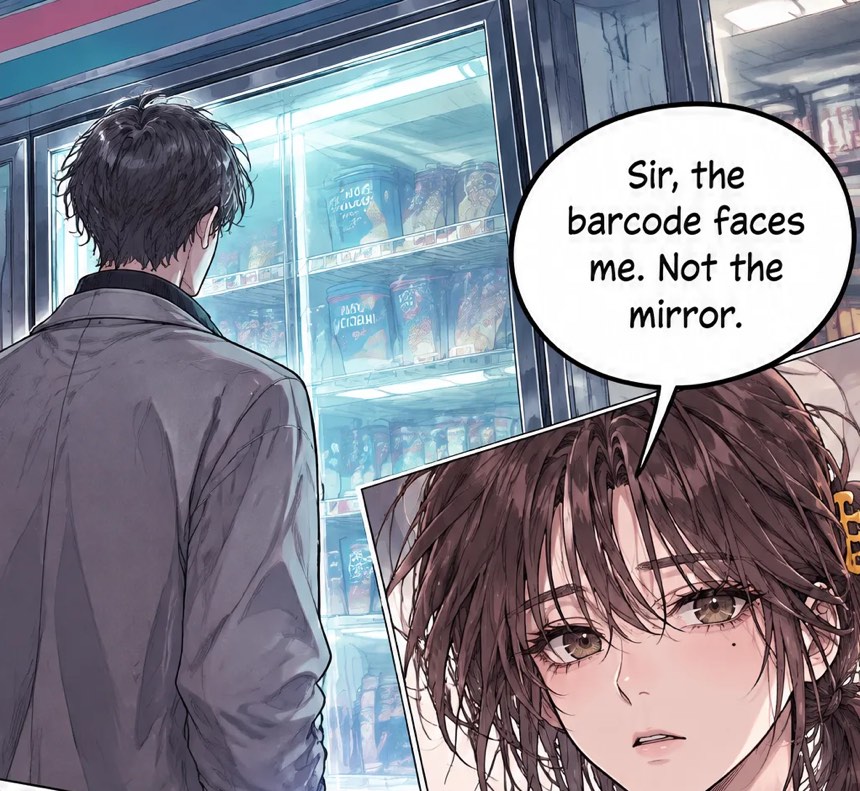
Payment in sangpyeong tongbo, the brass coin of the Joseon dynasty.A customer and a freezer door. Hana has notes.Giggles in the ramen aisle, and a glowing hanja for 'soul'.
Gwishin is the everyday Korean word for ghost, and folklore treats ghosts as people with unfinished business rather than pure evil. A grandmother paying with Joseon-era coins and kids who giggle until they get candy fit that tradition well. They aren't attacking anyone. They just want to be noticed.
Kang HanaOkay, ghost kids. Candy. Then stop rearranging the Shin Ramyun.
Figures not in the art (yet)
The series hints at "gods who do not forgive," but none appear in the published art. If they show up, these are the names to know: King Yeomra, judge of the underworld and the reapers' boss; Samsin Halmeoni, the grandmother goddess of childbirth; the cheonyeo gwishin, the long-haired maiden ghost in white of classic horror; and the haetae, the lion-like guardian that protects against fire and judges right from wrong.
Why everyday Seoul makes the perfect haunted city#
Putting folklore in the present day does three things at once. First, it creates instant contrast: a 600-year-old reaper next to a barcode scanner is funny and eerie in the same panel. Second, it turns old spirits into relatable workers. A tired reaper with overdue paperwork is a ghost story and a story about burnout. Third, it reminds readers that these beliefs never fully disappeared. Shamanic rituals are still performed in Korea today, and the city's all-night streets leave plenty of room for strange customers.
Night-shift spirit report · Mapo branch
Jeoseung saja
92
Punctual to the minute. Says one word.
Dokkaebi
78
Loud, generous, probably holding soju.
Gumiho
88
Flawless makeup. Knows more than she says.
Ramen-aisle ghosts
35
Harmless if paid in candy.
DING-DONG
Day 31 on the receipt. Thirty days in the ledger. The countdown starts in episode 1.
A jeoseung saja is a messenger of the afterlife (jeoseung) who comes to collect the dead and guide their souls to judgment in the underworld. Traditional funerals sometimes set out a small table of rice, coins and straw sandals for these messengers, so they treat the soul kindly on the road.
What is the difference between a dokkaebi and a demon?
Dokkaebi are not demons. They are mischievous Korean goblin-like spirits who love tricks, wrestling and drinking, and they reward kind or clever people as often as they punish greedy ones. Many tales give them a magic club that can summon gold or food.
Is a Korean gumiho the same as a Japanese kitsune?
Both are nine-tailed foxes from a shared East Asian tradition, but they lean in different directions. The Korean gumiho is usually a dangerous shapeshifter, often a beautiful woman, who preys on humans, while Japanese kitsune stories include many helpful or divine foxes alongside the tricksters.
 Myth & Folklore
 Toonor Originals