Silver hair, fox ears, a smirk, and a fan of tails that fills the whole panel: few creatures are as instantly readable as the nine-tailed fox. If you've ever wondered why nine tailed fox anime heroes feel so different from the fox women of Korean dramas, the answer is that they come from three related but distinct traditions.
Japan, Korea and China all tell stories about foxes that grow magical with age, and all three landed on the same striking image of nine tails. What each culture does with that fox is where it gets fun. Here's a fan's guide to the kitsune, the gumiho and the huli jing, and to the Toonor fox spirits who carry those legends into modern romance.
Key takeaways
1The kitsune of Japan can be a god's messenger, a trickster or a loving wife.
2The gumiho of Korea is traditionally the most dangerous of the three.
3The huli jing of China runs from good omen to palace-wrecking seductress.
4Comics love all three because a fox spirit is beautiful, ancient and never quite safe.
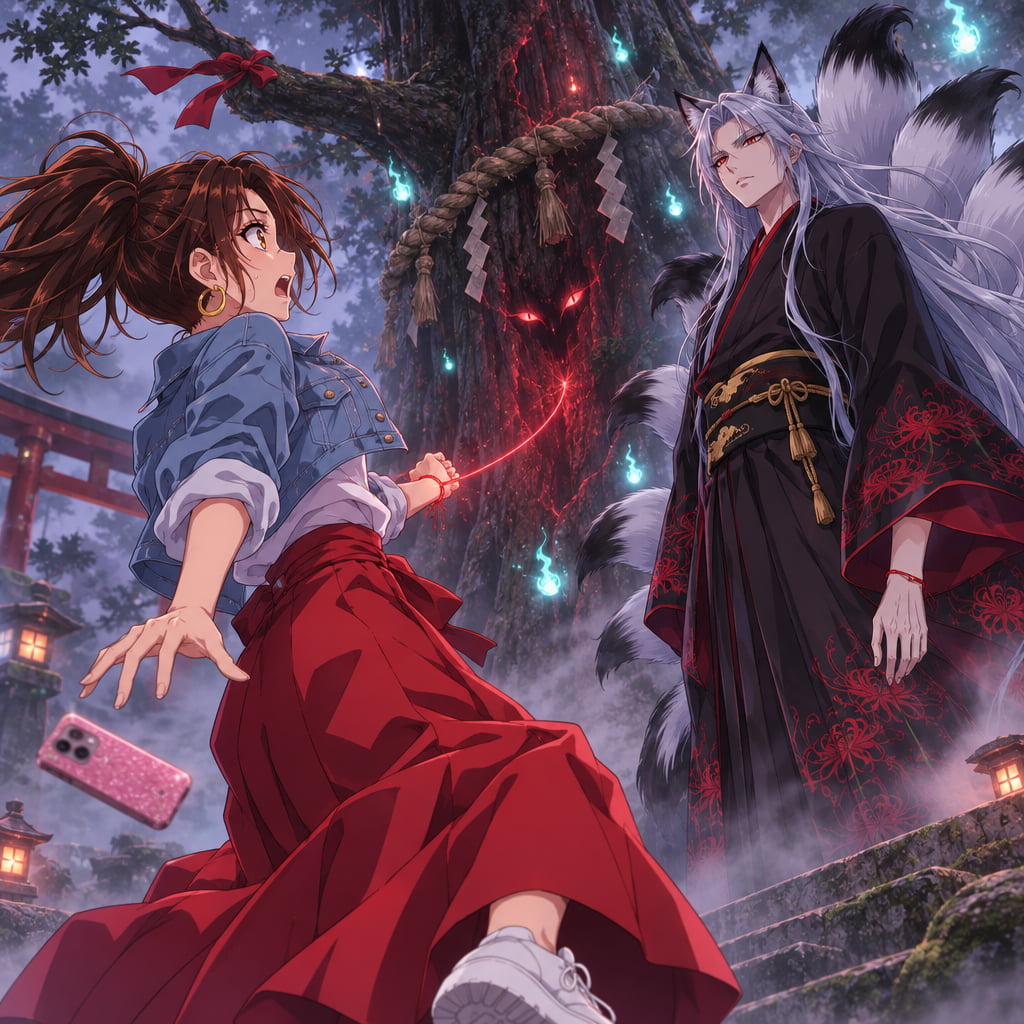
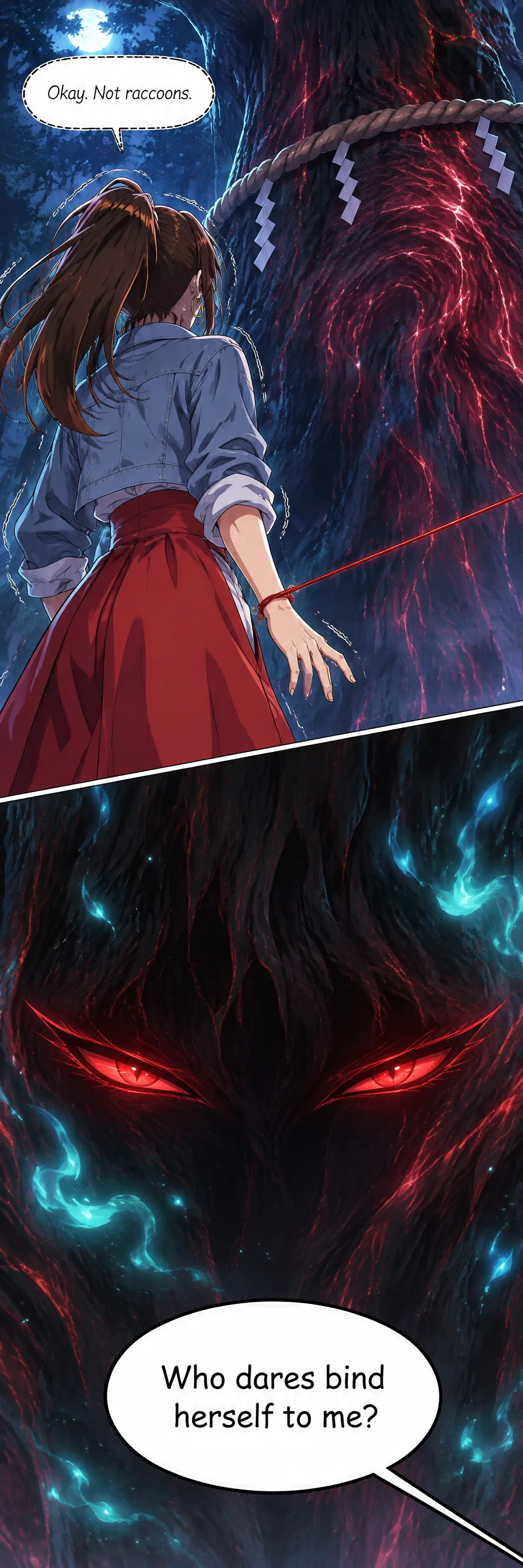
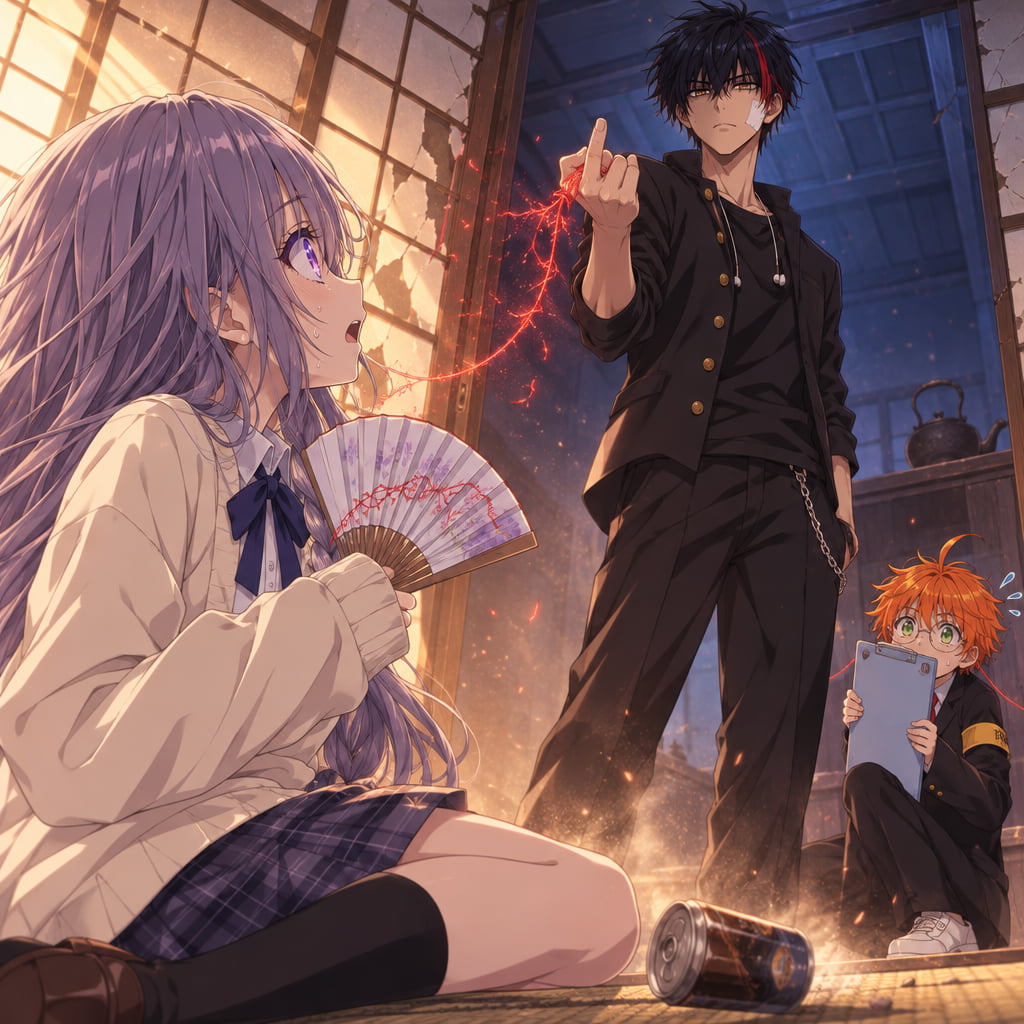
The red thread, the sacred cedar, the glowing eyes and all nine tails: one image from Wed to the Fox of the Forgotten Shrine that packs in half the folklore in this post.
Folklore travels, and the fox spirit travelled across East Asia for centuries. Early Chinese texts describe a nine-tailed fox, and fox lore in Korea and Japan grew alongside and out of those ideas. Details shift from region to region and storyteller to storyteller, so treat the table below as the broad strokes, not a rulebook.
Japan
Korea
China
Name
Kitsune (kyubi no kitsune when it has nine tails)
Gumiho
Huli jing (fox spirit); jiuweihu for the nine-tailed fox
Usual mood
Mixed: divine messenger, prankster or menace
Mostly dangerous
Ranges from lucky omen to seductive villain
Where the power comes from
Age: tails are often said to grow as the fox gets older and wiser
Long life, and in some tales a magic fox bead
Age and self-cultivation, in many tellings
Signature story
The fox wife who must leave once her secret is out
The fox woman who preys on humans, or wants to become one
In Japan, foxes are closely tied to Inari, the deity of rice, harvests and prosperity. Foxes are Inari's messengers, which is why Inari shrines are guarded by pairs of stone foxes, often dressed in little red bibs. They aren't Inari, but they are on the payroll.
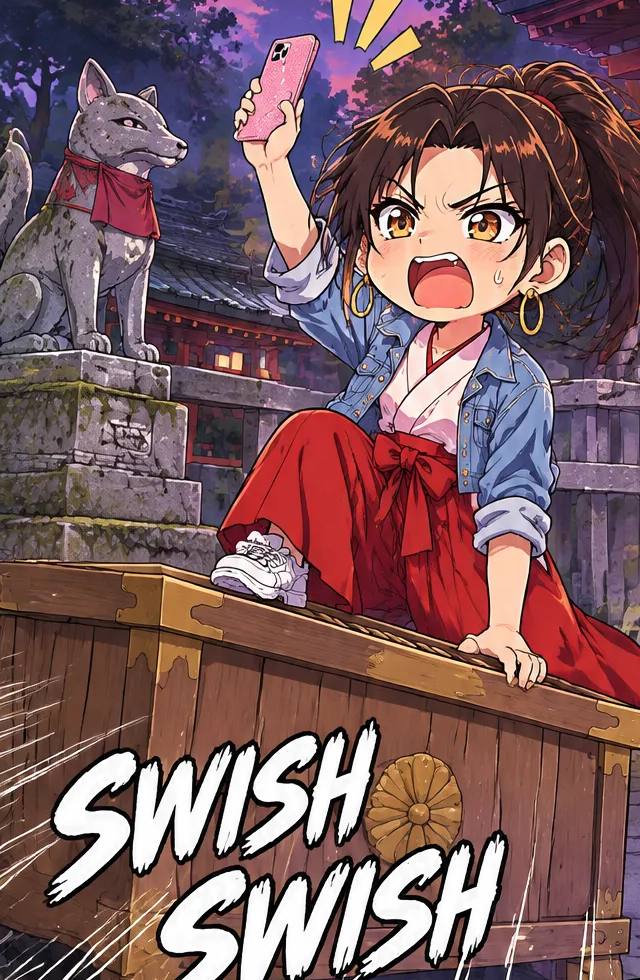
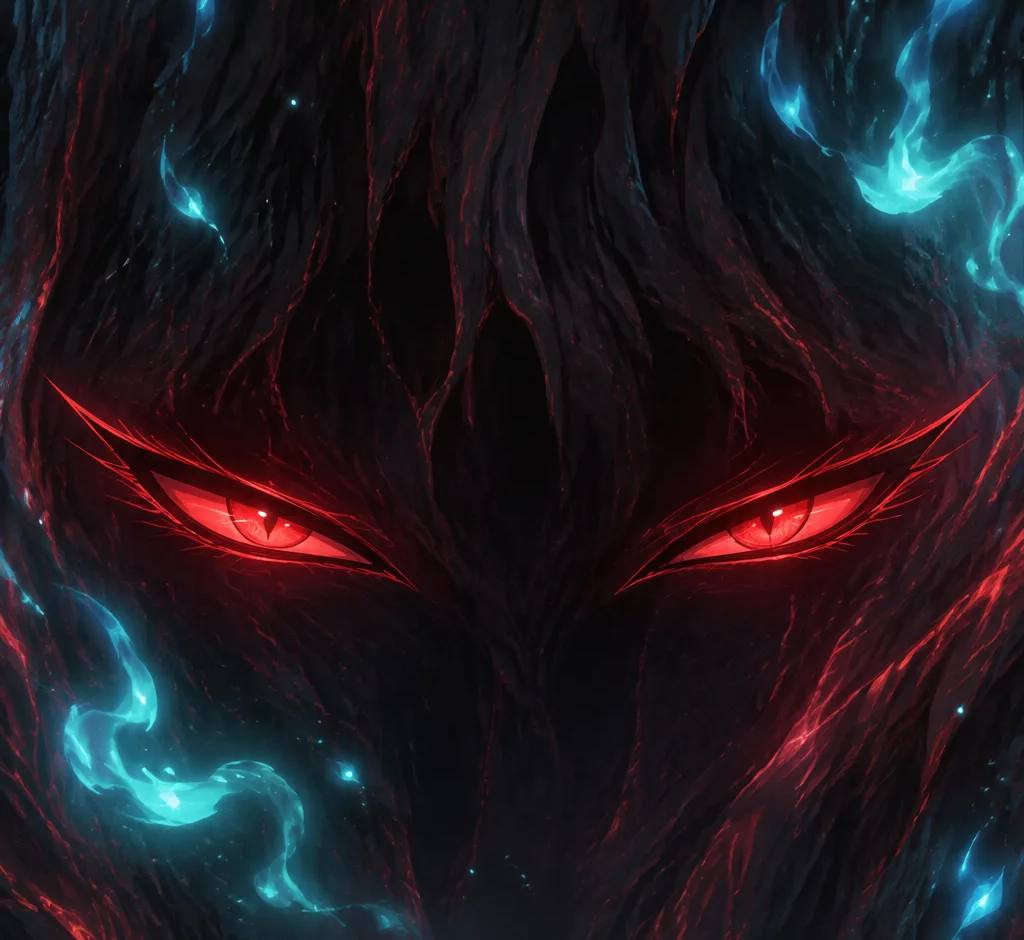
A stone fox in a red bib keeps watch while Mei climbs the offering box for one bar of signal.Crimson slit-pupil eyes and teal foxfire inside the sacred cedar.!!
The best-known kitsune rule is that tails grow with age and power. A young fox has one; many stories say it gains more over the centuries, and a fox with nine tails is ancient, wise and formidable. (How long that takes varies, though a thousand years is the number you'll hear most.) Kitsune are also linked to kitsunebi, or foxfire: eerie floating lights in the dark, which is exactly what drifts around those eyes above.
From there, the kitsune splits into two famous personalities. The trickster shapeshifts, usually into a beautiful woman, to fool, tease or punish humans. The fox wife marries a man who doesn't know what she is, and the story turns bittersweet when her secret comes out. The most famous fox wife, Kuzunoha, is remembered in legend as the mother of the onmyoji Abe no Seimei. On the darker side sits Tamamo-no-Mae, a court beauty unmasked, in most versions, as a nine-tailed fox.
Korea: the gumiho, the fox who wants a human heart#
Korea's nine-tailed fox, the gumiho, has a much scarier reputation. In most traditional tales she is a shapeshifter who takes the form of a beautiful woman to lure people in, and she feeds on human livers or hearts, depending on who's telling it.
Some stories add a twist that modern writers adore: the gumiho wants to become human. In one popular version she must go a thousand days without eating anyone. Another strand of folklore gives her a magical fox bead (yeowu guseul) that holds her power. Those longings are why today's gumiho is so often a tragic or romantic lead rather than a plain monster. Read more about her neighbours in our guide to Korean folklore in comics.
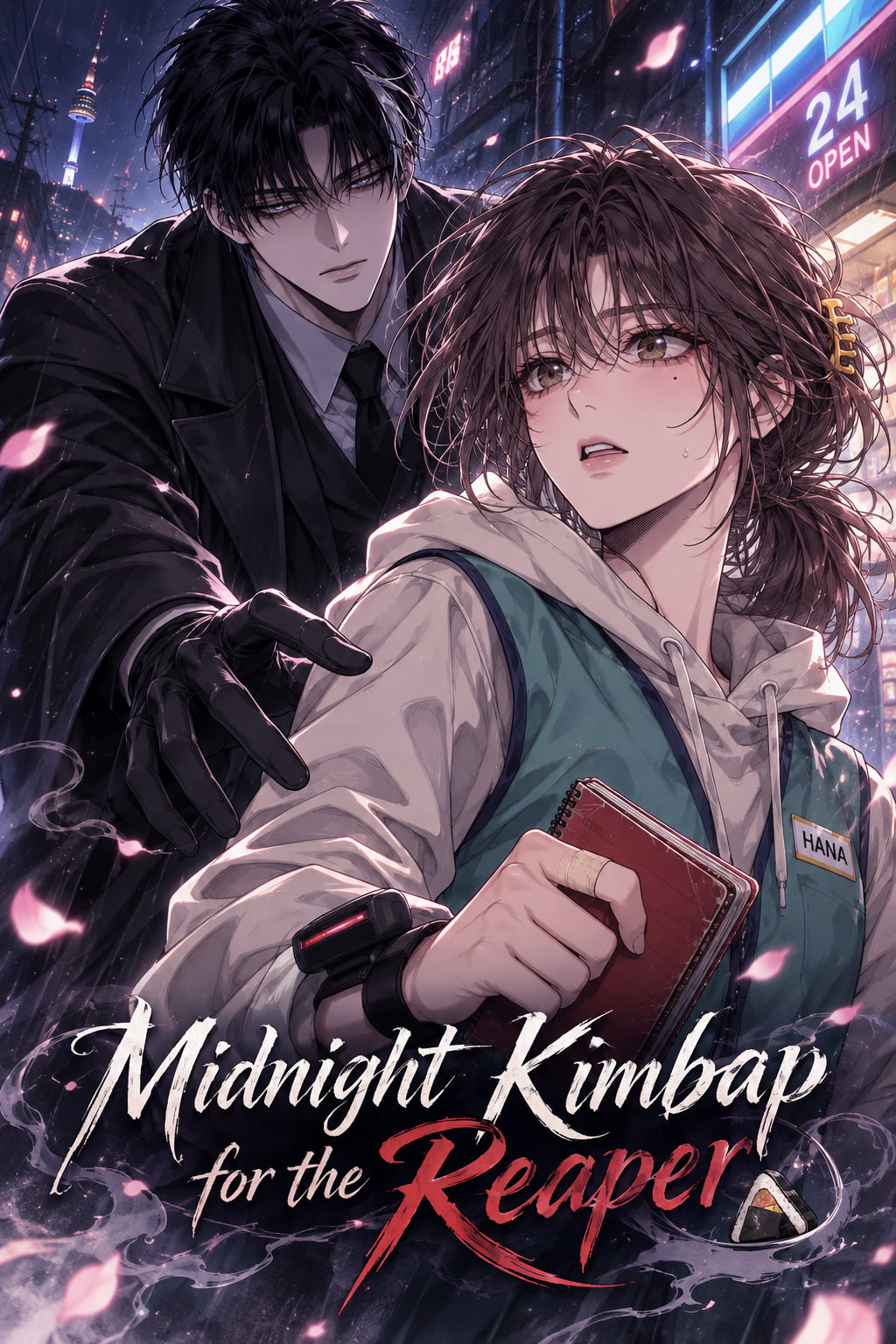
Toonor's Korean example is Gu Mi-rae from Midnight Kimbap for the Reaper, a series set in a Seoul where the old gods never left and just got day jobs. The series' cast notes introduce her as a mysterious rival, a gumiho who sells cosmetics in Myeongdong and knows who wrote the heroine's name in the reaper's ledger. Her design gives her a glowing pearl pendant, which may well be a nod to the fox bead.
Not on the page yet
So far Gu Mi-rae hasn't appeared in the published episode, so everything here comes from her design and the series' cast notes, not from her scenes.
China has the oldest written record of the nine-tailed fox. The ancient Classic of Mountains and Seas describes one, and in some early traditions a nine-tailed fox was a sign of good fortune. Over time, the wider family of fox spirits, the huli jing, picked up a more dangerous image.
The classic novel Investiture of the Gods makes the fox spirit a villain: Daji, the consort who helps bring down a dynasty, is possessed by a fox in that telling. Meanwhile Pu Songling's Strange Tales from a Chinese Studio is full of fox spirits who charm, test or genuinely love the scholars they meet. That mix of menace and devotion is the same tension romance comics run on today.
Toonor's headline fox is Kurogane from Wed to the Fox of the Forgotten Shrine. He was once the proud guardian of a mountain, but his shrine has had no visitors for years and his power is fading. That is very kitsune: a fox spirit's strength is bound to its shrine, and his design even includes a weakened form as a fluffy fox kit with nine stubby tails.
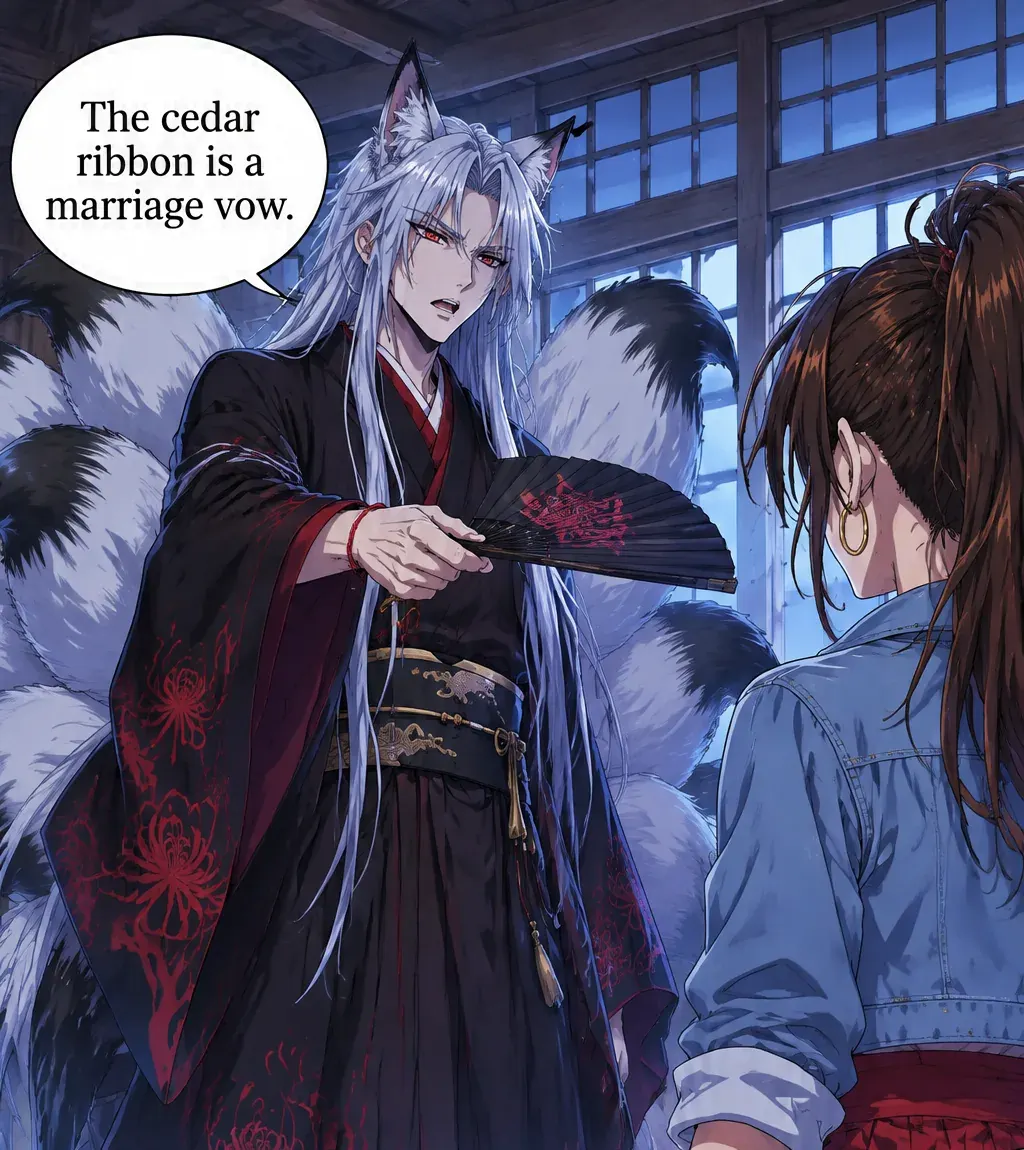
Kurogane in episode 2: silver hair, black-tipped ears, a fan of tails, and a black kimono with crimson spider lilies.
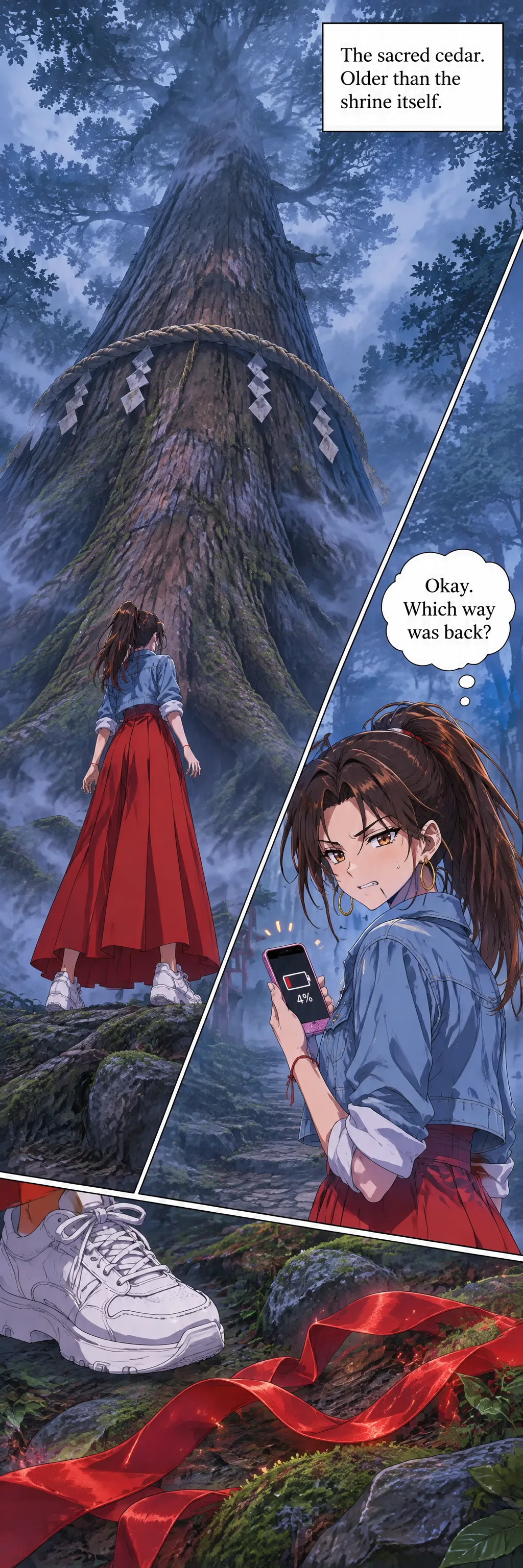
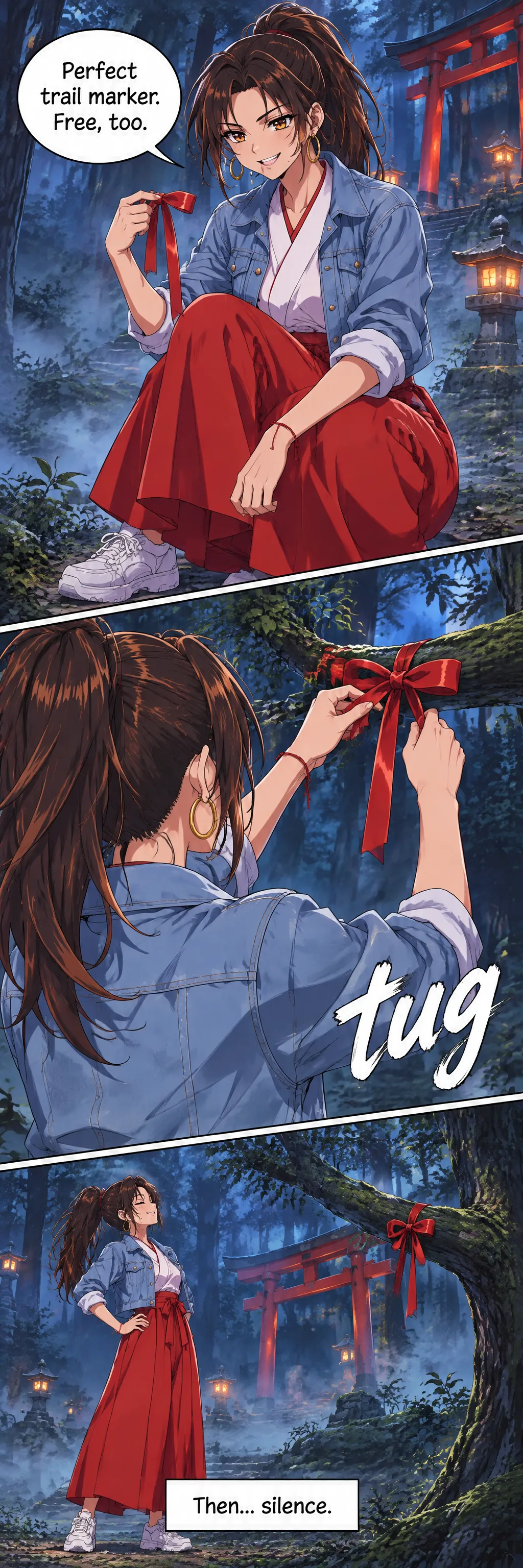
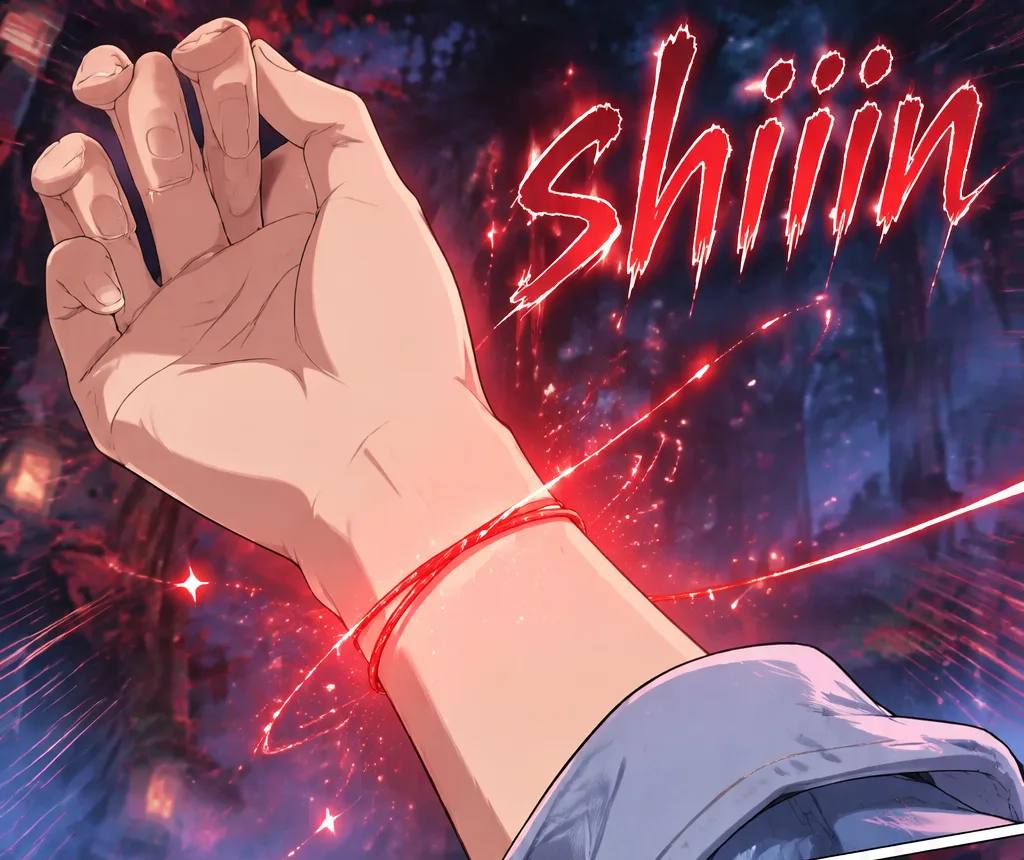
Then Mei Takara arrives. She only came to sell her late grandmother's shrine, but while hunting for phone signal she ties a stray red ribbon to the sacred cedar to mark her trail. Every bell rings on its own, a red thread wraps around her wrist, and she's suddenly married to the fox. Here's how episode 1 builds to that reveal.
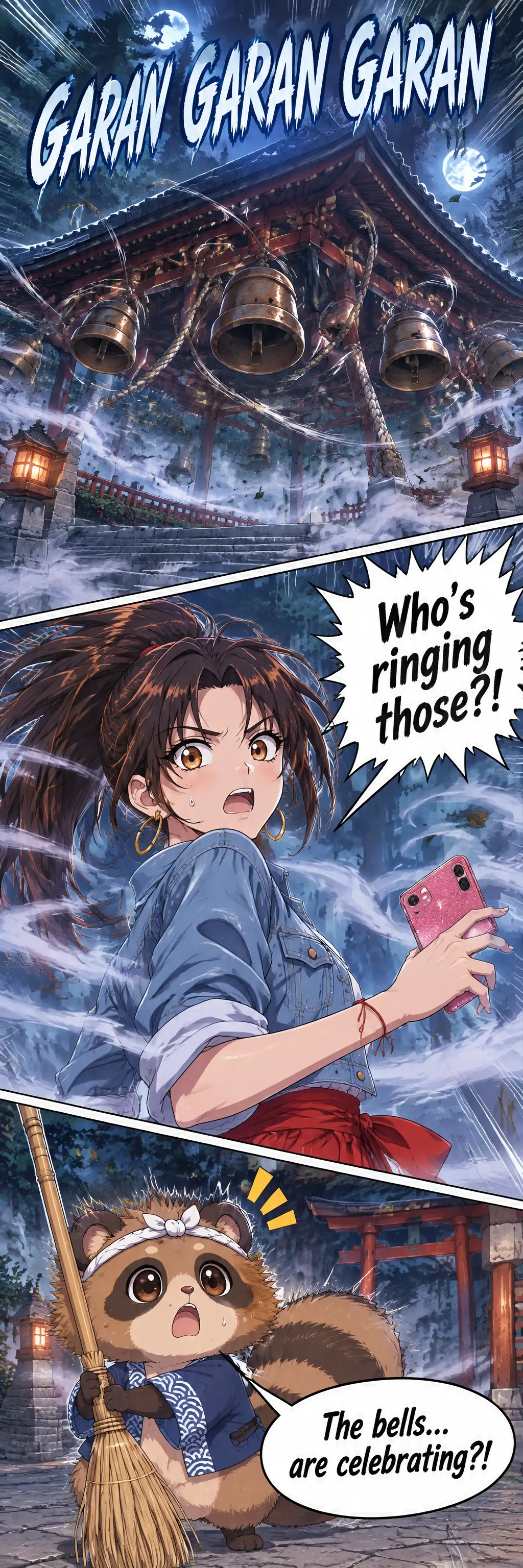
Scroll the build-up: a sacred tree, a borrowed ribbon, bells that ring by themselves, and a long pause before the eyes open.
GARAN GARAN!
Every bell in the shrine, ringing for a wedding nobody planned.
The thread that binds Mei to Kurogane. East Asian legend has its own invisible red thread tying fated partners together.
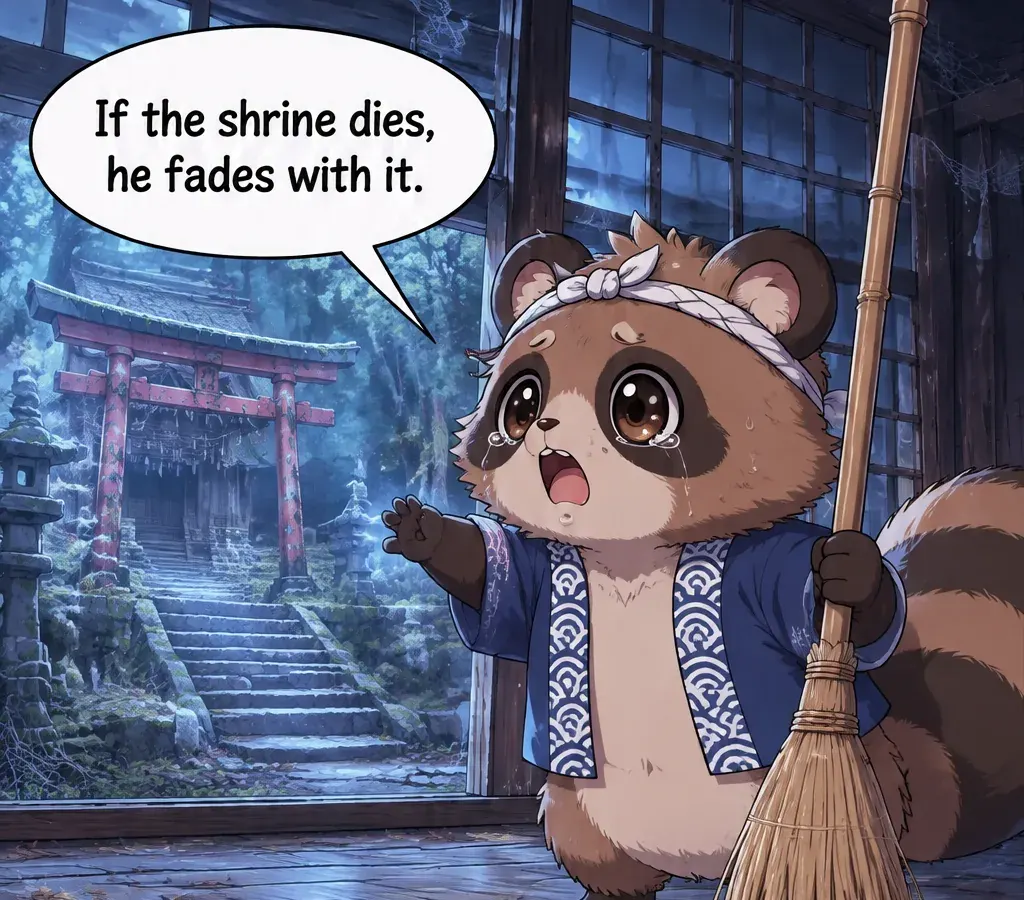
Two more folklore touches are worth spotting. The cedar wears a shimenawa, the sacred rope that marks something holy in Shinto, which is why tying a ribbon to it is a very bad idea. And the shrine's anxious caretaker, Kotaro, is a tanuki, Japan's other famous shapeshifting animal.
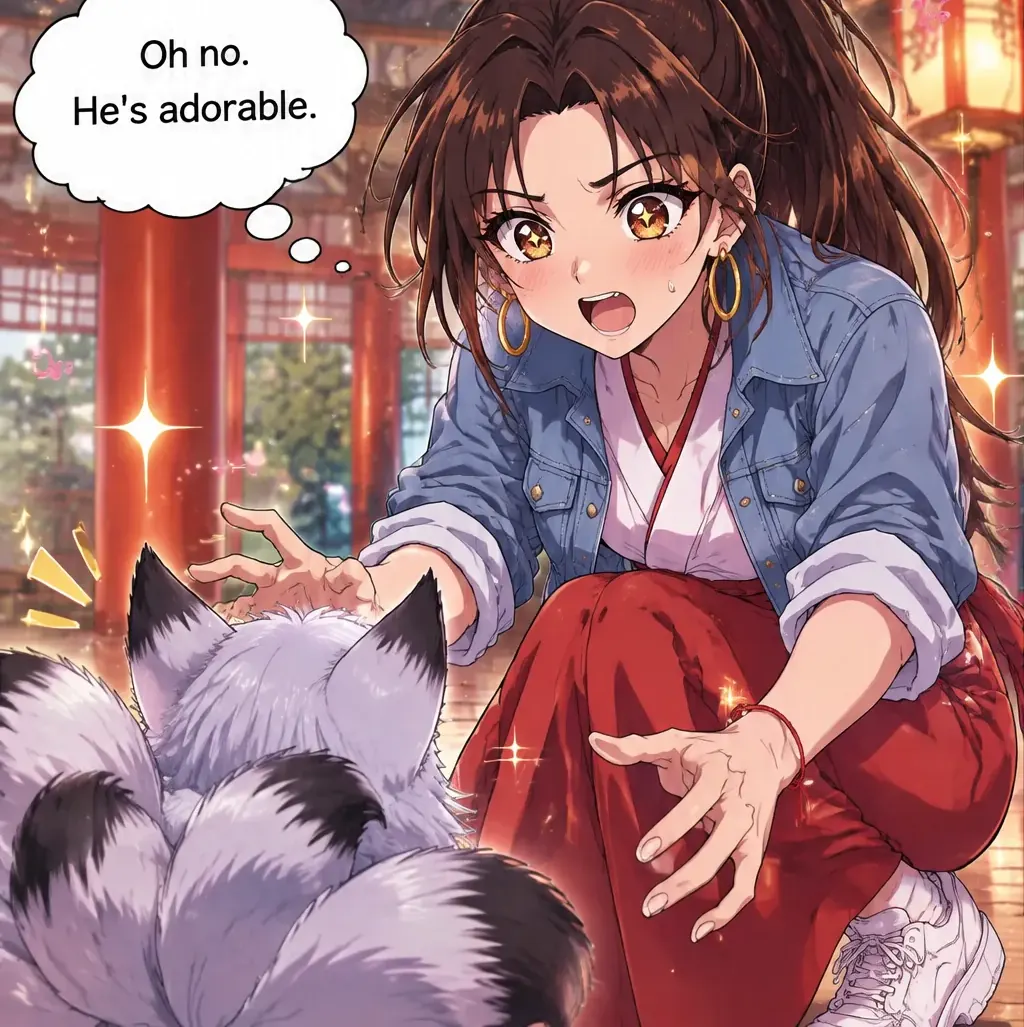
Mei: denim jacket, borrowed miko robes, zero patience, until her husband turns into a fox kit.Kotaro: tanuki spirit, broom twice his height.
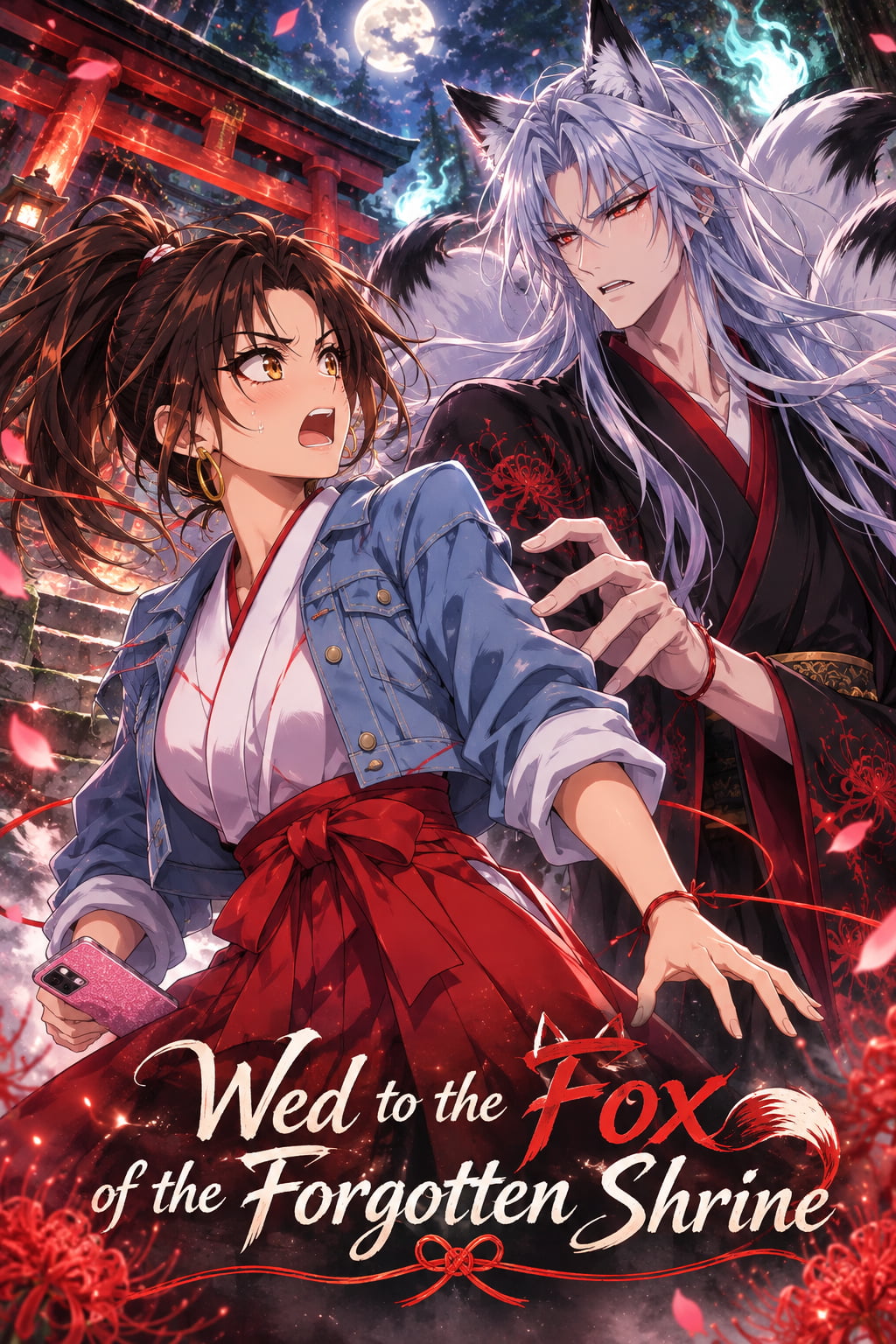
Wed to the Fox of the Forgotten Shrine
One red ribbon, one wrong tree, and now she's married to a nine-tailed fox who'd rather curse her than kiss her.
Fox spirit
Contract marriage
Enemies to lovers
Rom-com
The only way to undo the bond is to restore Kurogane's power, which means bringing worshippers back to the shrine. Mei's plan involves livestreams and limited-edition charms. Kurogane's plan involves scoffing.
Nine tailed fox anime romance: why we fall for the fox#
Put a fox spirit in a romance and you get several hooks at once. He's centuries old, so the human lead is an unpredictable new thing in his long life. He's proud and dangerous, which makes every softening moment count. And there's a built-in clock: what happens when the magic that binds them can finally be broken? That's why fox stories slot so neatly into enemies-to-lovers slow burns and the wider world of supernatural romance.
KuroganeWho dares bind herself to me?
Kurogane · fox spirit stat sheet
Pride
97
Once the guardian of an entire mountain.
Current power
22
A shrine nobody visits doesn't pay the bills.
Patience for hashtags
5
He scoffs at every one.
Tails
100
All nine, present and fluffy.
“When the marriage can finally be undone, will either of them still want to cut the thread?
What is a nine-tailed fox called in Japanese, Korean and Chinese?
In Japan it is a kyubi no kitsune (nine-tailed kitsune), in Korea a gumiho, and in China a jiuweihu, part of the wider family of fox spirits called huli jing. All three grew from a shared East Asian belief that foxes gain magic as they age.
Why does a kitsune have nine tails?
In Japanese folklore a fox is often said to grow a new tail as it gains age, wisdom and power. Nine is usually the maximum, and many tellings say it takes around a thousand years to reach, though the exact numbers vary from story to story.
Is a gumiho good or evil?
In most traditional Korean tales the gumiho is dangerous: a shapeshifter, often in the form of a beautiful woman, who preys on humans. Some versions give her a wish to become human, and modern dramas and comics often make her a sympathetic or romantic lead.
 Myth & Folklore
 Toonor Originals