Tower Climbers and Regressors: Why “Back to Floor 1” Is Action's Most Addictive Hook
Why tower-climbing and regression stories dominate action webtoons: the power curve, the second-chance fantasy and the tropes that keep readers scrolling.
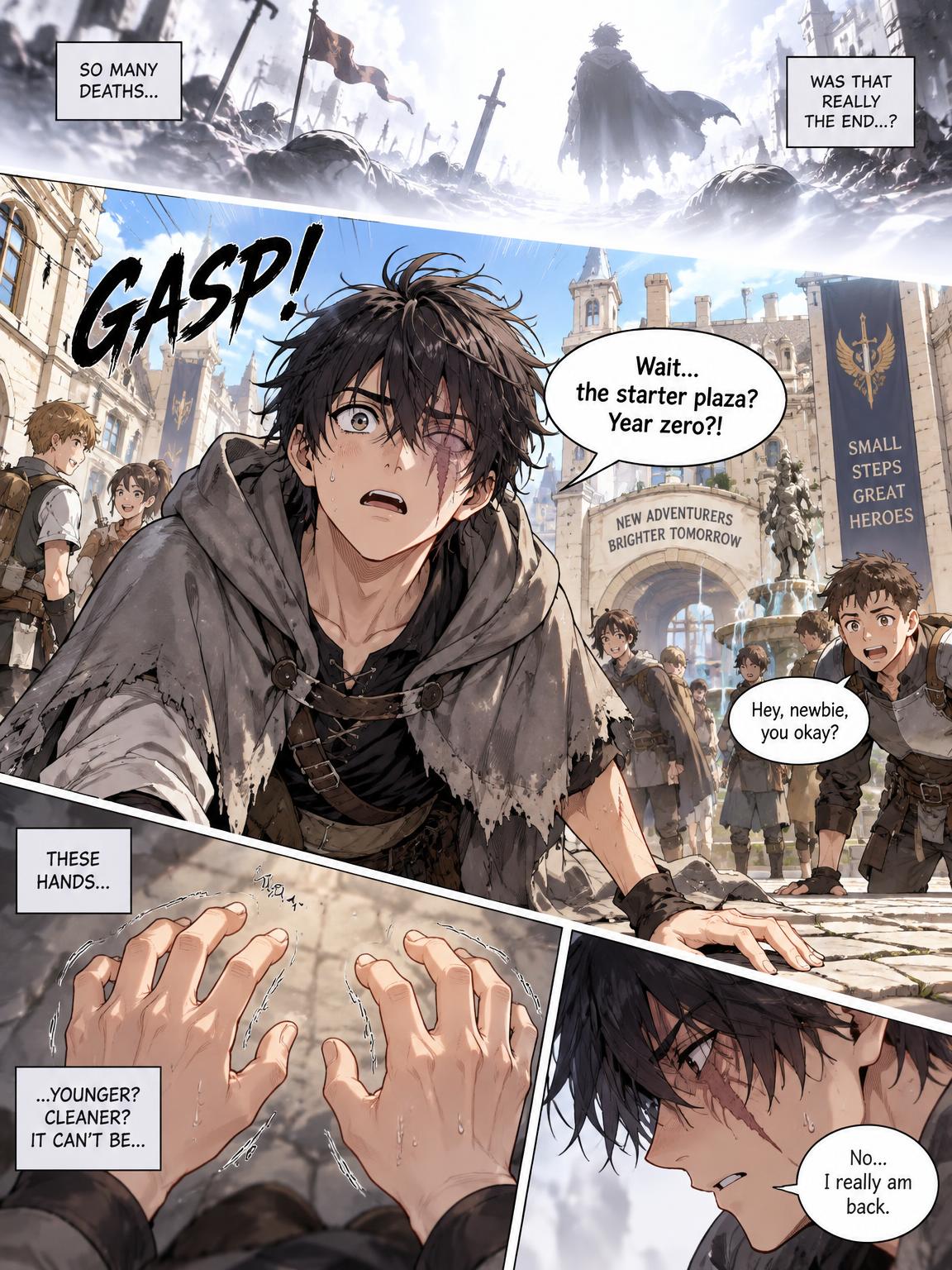
A hero dies at the top of a tower. Then he opens his eyes on the very first floor, years younger, with every memory intact. Few premises in action comics hook readers this fast, and it's worth understanding exactly why.
Tower-climbing and regression stories are two of the most-read shapes in vertical action comics, and they're even stronger together. Here's what makes the formula work, the tropes worth keeping, and how to give it a twist of your own.
Key takeaways
1A tower turns progress into geography: every floor is a visible step toward the goal.
2Regression turns the hero's failure into a superpower: knowledge of the future.
3Readers stay for the power curve, but they return for the people the hero swore to save.
A tower solves the hardest problem in long-running action: showing progress. Floor numbers are a scoreboard. A new floor means a new rule, a new boss and a new arena, so every arc arrives with its own setting for free.
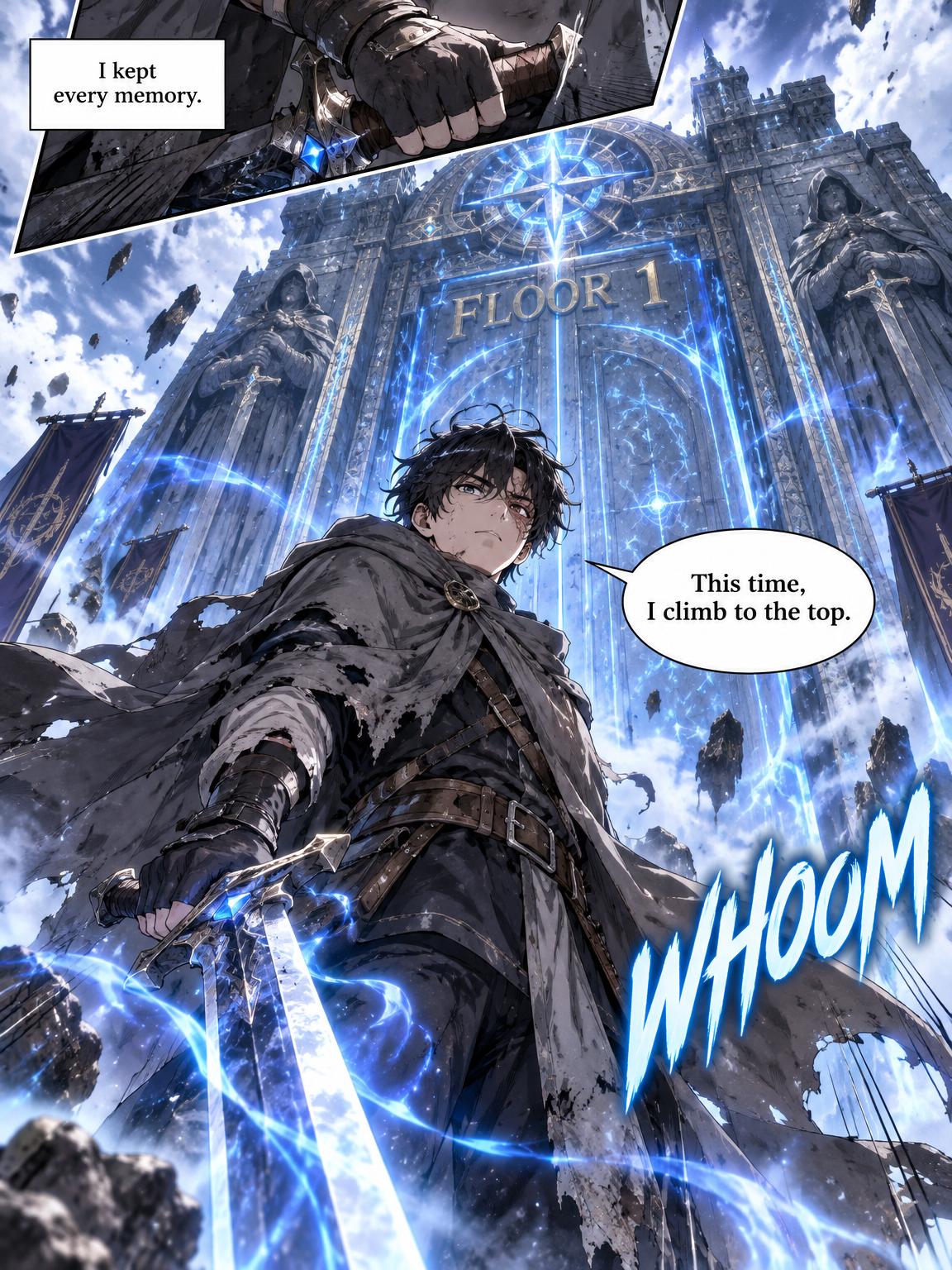
The tower is always in frame: a promise of every arc still to come.
It also gives your cover art an instant focal point. Put the tower behind the hero and the reader understands the whole series in one image: one person, one impossible climb.
Most heroes start weak and ignorant. A regressor starts weak but knows everything: which floor kills, which ally betrays, which hidden reward sits behind which wall. That gap between the body and the mind is pure dramatic irony, and readers love being in on it.
GASP!
The moment the hero realises he's back is the real inciting incident, not the death.
Back in the starter plaza: the reader and the hero discover the regression together.
Regression stories promise a steep, satisfying climb. A quick way to plan it is to sketch a stat sheet for your protagonist at the start of the series and at the end of the first arc. If the jump isn't dramatic, the hook isn't either.
Climber stats · after regression
Raw strength
18
Back to a rookie's body.
Battle instinct
86
Ninety-nine floors of experience.
Knowledge of the tower
97
He's seen the top.
Trust from allies
12
Nobody knows who he is yet.
Notice the lopsided bars. The gaps are the plot: building strength fills the first arc, earning trust fills the second, and the knowledge bar gets dented the first time the future doesn't go the way he remembers.
Hot take
The best regression stories break the hero's foreknowledge early. Once the timeline starts changing, the reader can't predict the next floor either, and the tension snaps back into place.
The “second chance with foreknowledge” engine isn't just for swordsmen. Romance fantasy runs on it too: a heroine wakes up inside a palace or a novel she has read, and uses what she knows to rewrite her ending.
One hook, many genres: action regressors, reincarnated heroines and cosy slice-of-life all trade on what the hero already knows.
A regression story sends the hero back in time, usually to the start of their journey, with every memory of the future intact. The drama comes from using that knowledge to fix mistakes, save people they lost, and outgrow rivals who don't know what's coming.
What is a tower-climbing comic?
A tower-climbing comic is built around a tower of floors or levels, each with a new challenge, boss or rule. Climbing gives the story a built-in sense of progress and a clear goal: reach the top.
Why are regression stories so popular?
They combine a satisfying power fantasy with a clear structure. Readers already know the hero will get stronger, so every chapter promises a payoff: a smarter choice, a saved friend, or a rival caught off guard.
 Trope Explained
 Anime Culture