Blushes, Petals and Rain: The Visual Language of Anime Romance
Blush lines, sparkles, cherry petals, rain and chibi breaks: a visual glossary of anime romance tropes, each shown with real panels from Toonor comics.
A pink wash across the cheeks. A storm of cherry petals. Rain on a neon street. You know what these mean before anyone says a word. Anime romance tropes aren't only plot beats like fake dating or contract marriage; they are a whole visual vocabulary, and once you can read it, every panel says twice as much.
This is a field guide to that vocabulary, the shorthand that anime, manga and manhwa artists use to show a heart doing something inconvenient. Every example below is a real panel from a series you can read on Toonor, so you can jump straight from the glossary to the story.
The glossary at a glance
1Faces: blush lines, the soft-focus close-up and the sweat drop show what a character won't say out loud.
2Backgrounds: sparkles, flowers and petals show how one character sees the other.
3Weather and light: rain, backlight and colour temperature set the mood of the whole scene.
4Comedy: the chibi break lets a romance be cute and dramatic on the same page.
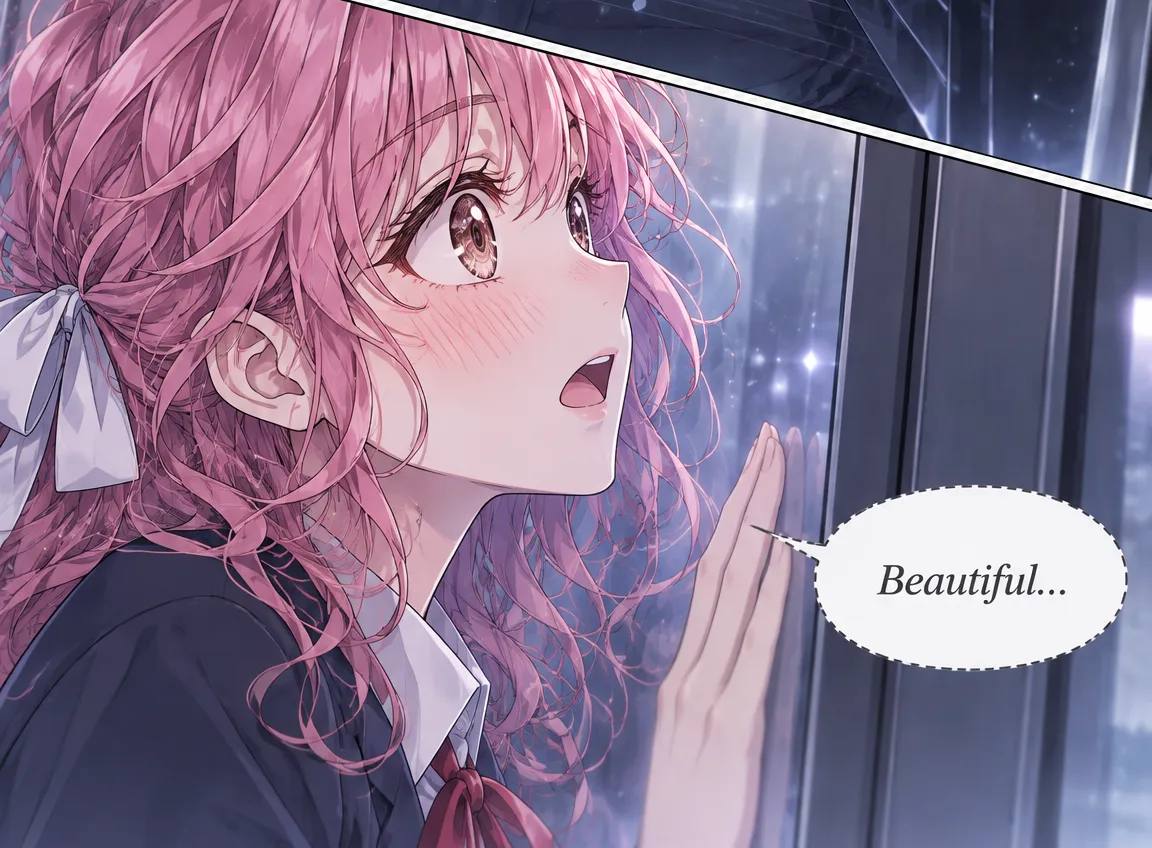
The most famous mark in the dictionary. A soft pink wash says “warm.” Add a row of short diagonal strokes across the cheeks and it becomes “flustered.” Pile on red hatching and you get full meltdown. Artists treat it like a volume knob, and readers learn to read the setting instantly.
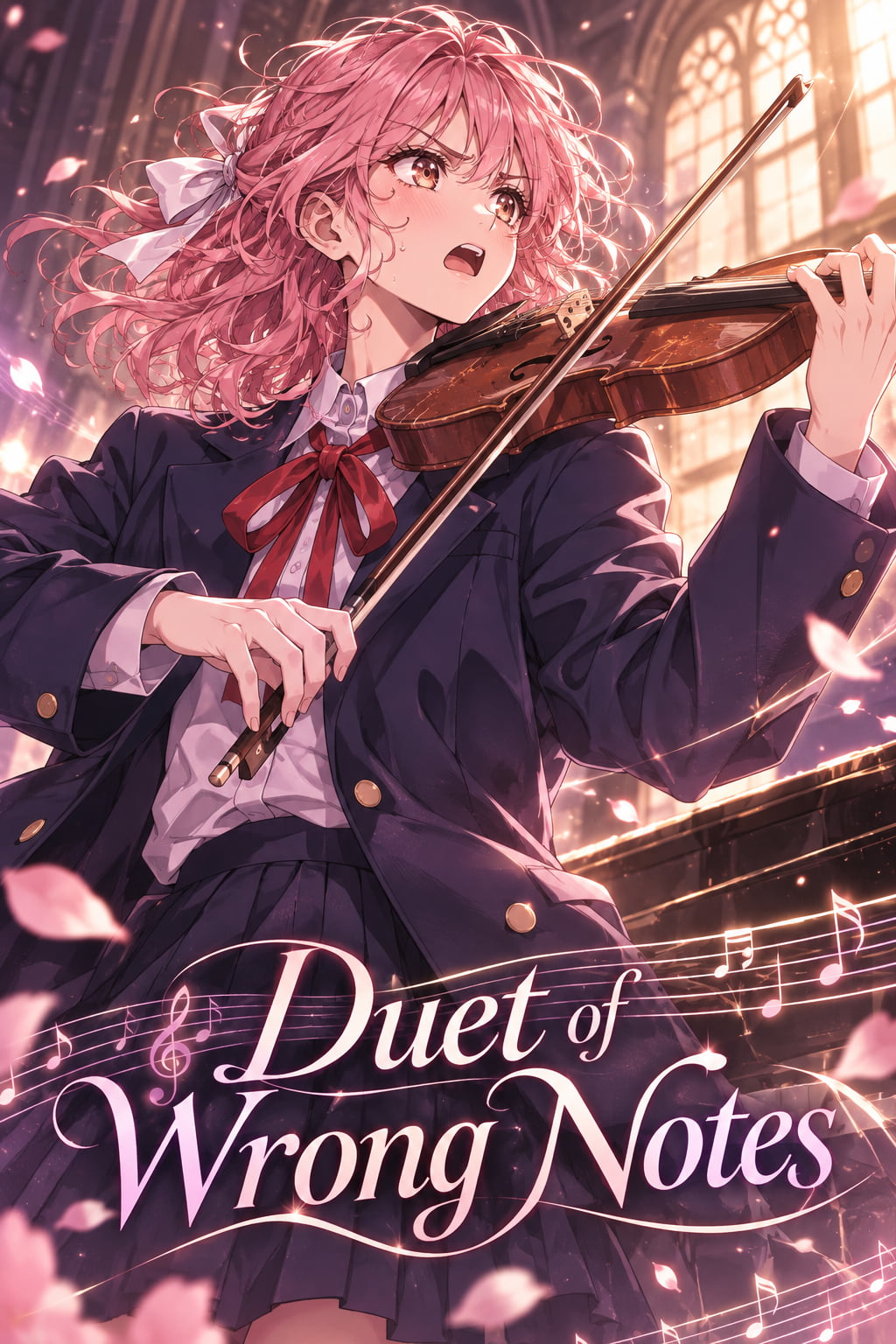
Fine diagonal blush strokes, a hand on the glass and a dotted thought bubble: Sakura has just heard Leon play in Duet of Wrong Notes.
Look at how quiet that panel is. Sakura spends the rest of the episode calling Leon heartless, but the blush lines get there first. That gap between what a face shows and what a mouth says is where most romance tension lives.
2. The soft-focus close-up
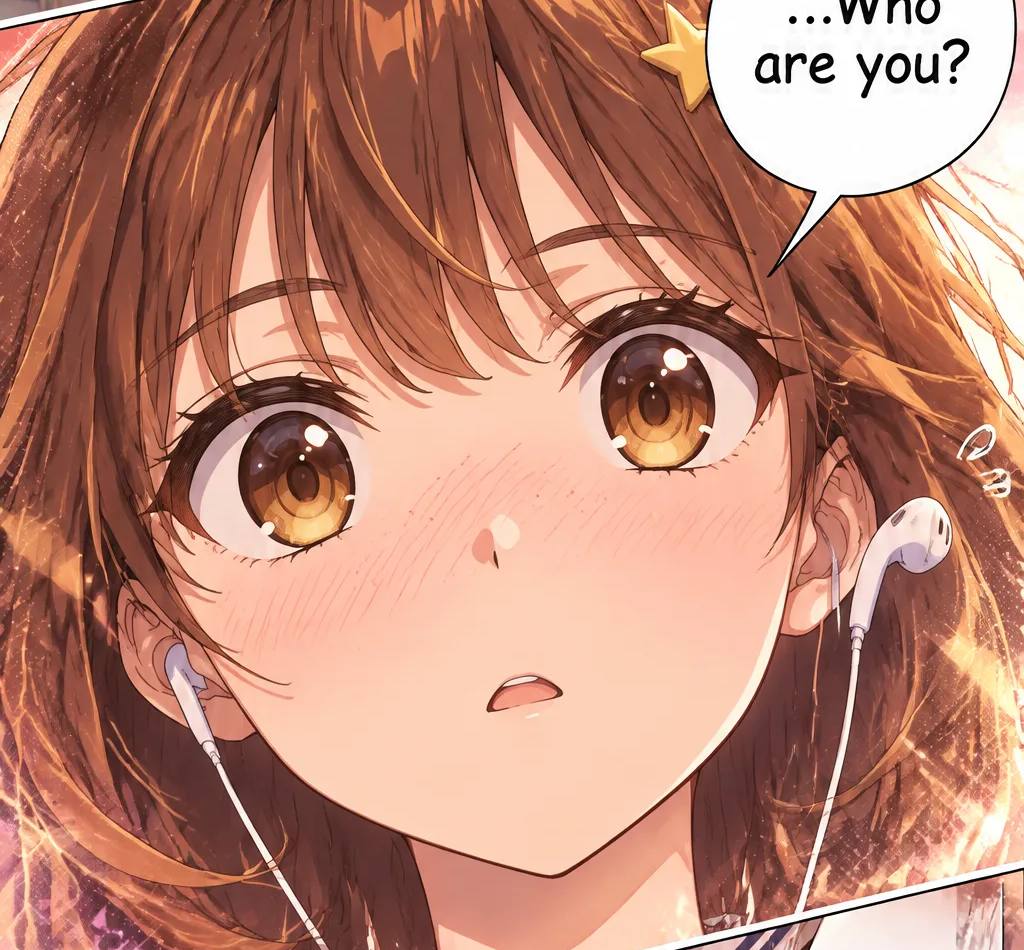
When a story wants you to stop scrolling, it pushes in tight on the eyes, softens the edges and fills the air with glowing specks. Big glossy irises, parted lips, light that seems to come from everywhere: this is the “my heart just stopped” frame.
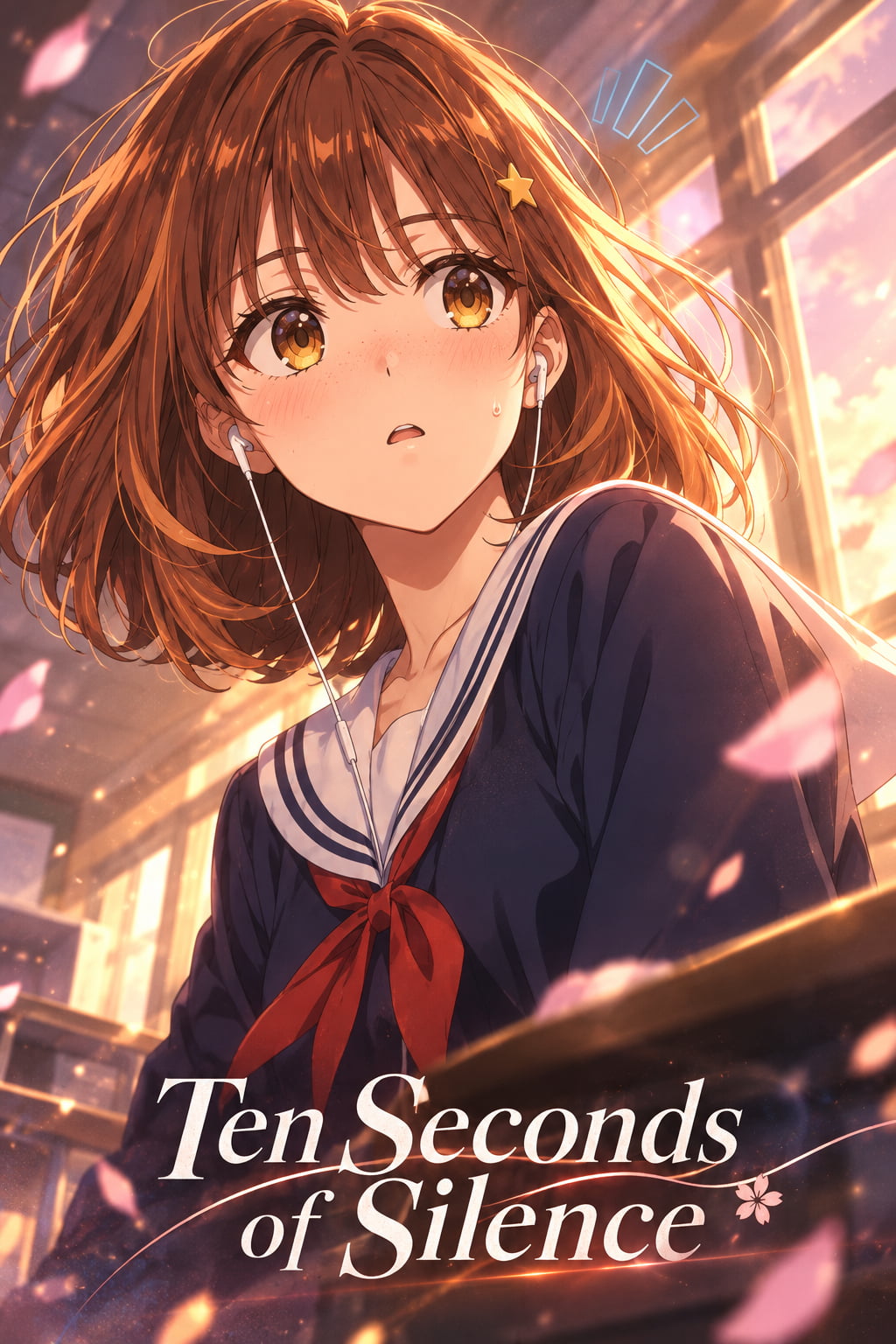
Hana hears everything ten seconds early, except this. The close-up from Ten Seconds of Silence lets the reader feel the surprise with her.
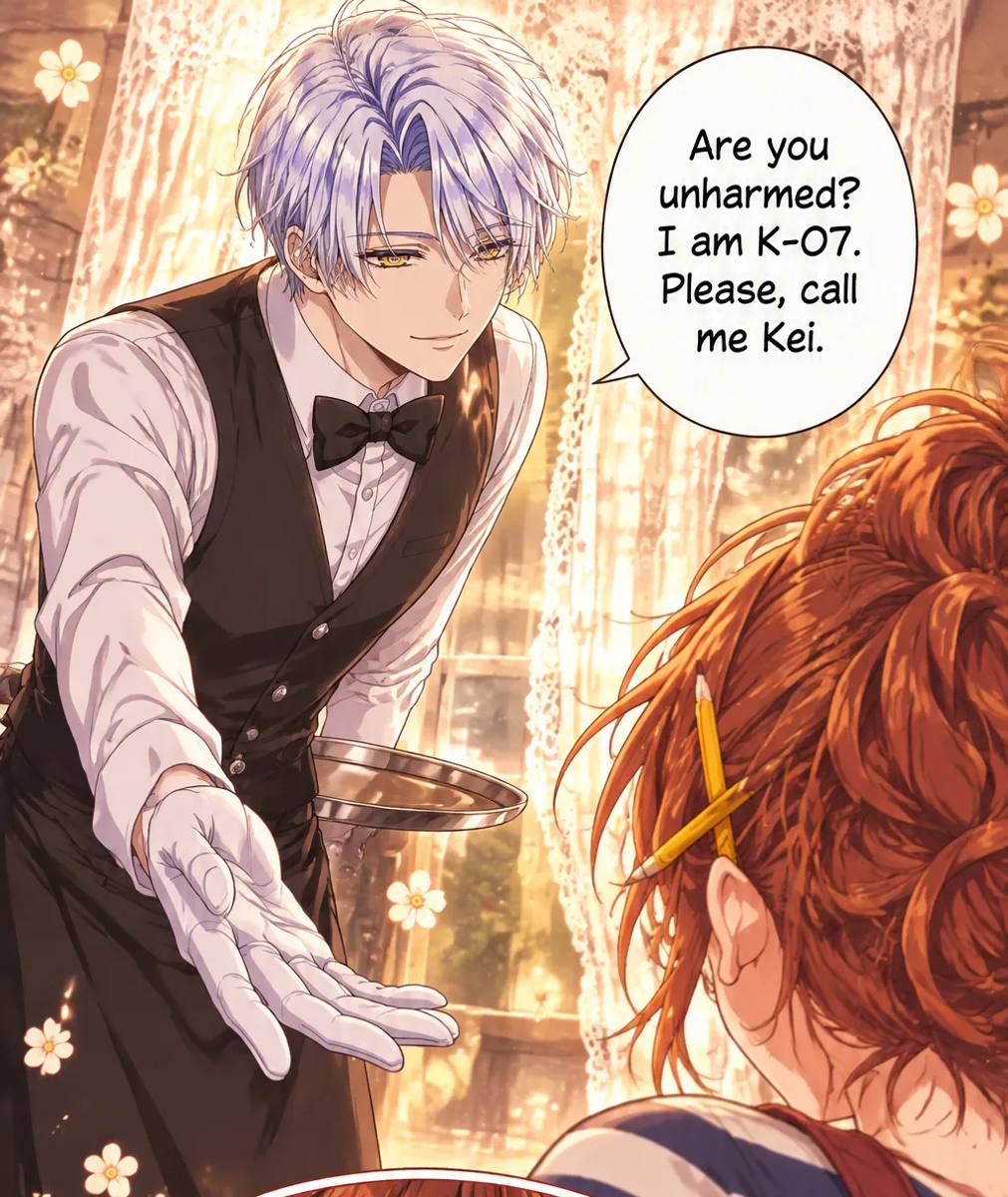
Borrowed from shoujo manga, this is the background that stops being a place and becomes a feeling. When a love interest appears haloed in light, lace and floating blossoms, you are seeing him through the heroine's eyes, not the camera's.
Lace curtains, golden haze and little white flowers: clumsy waitress Tama meets android waiter Kei in Kei Is Not Programmed for This. Her narration: “Okay. I am definitely dead. This is heaven.”
4. Falling petals
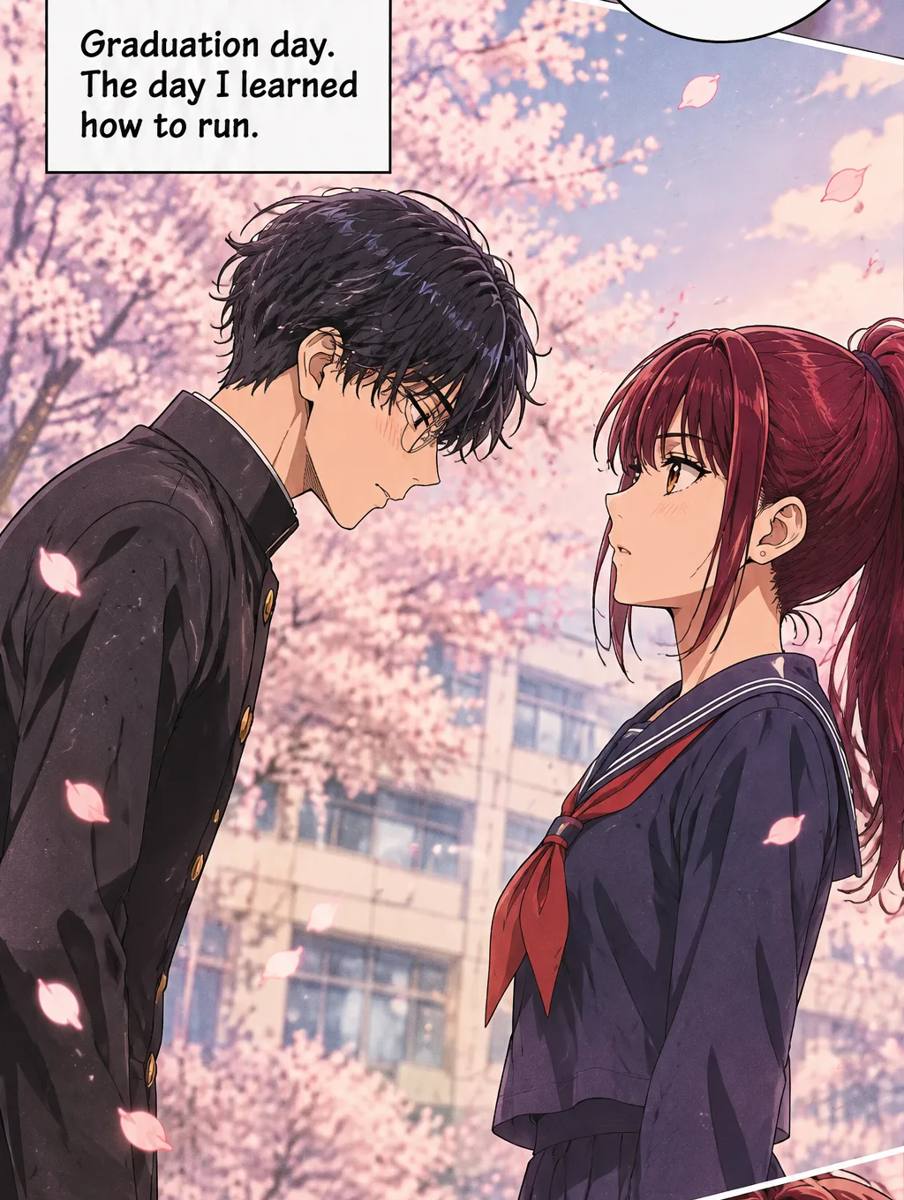
Cherry blossoms mean spring, graduation, beginnings and endings, all at once. Petals in the air also slow time down: they hang in the frame, so a confession under the trees feels like it lasts forever.
The petals are a trap. The caption says it all: “The day I learned how to run.” Akane turns Sota down, and the series is about finding out why, ten years later.
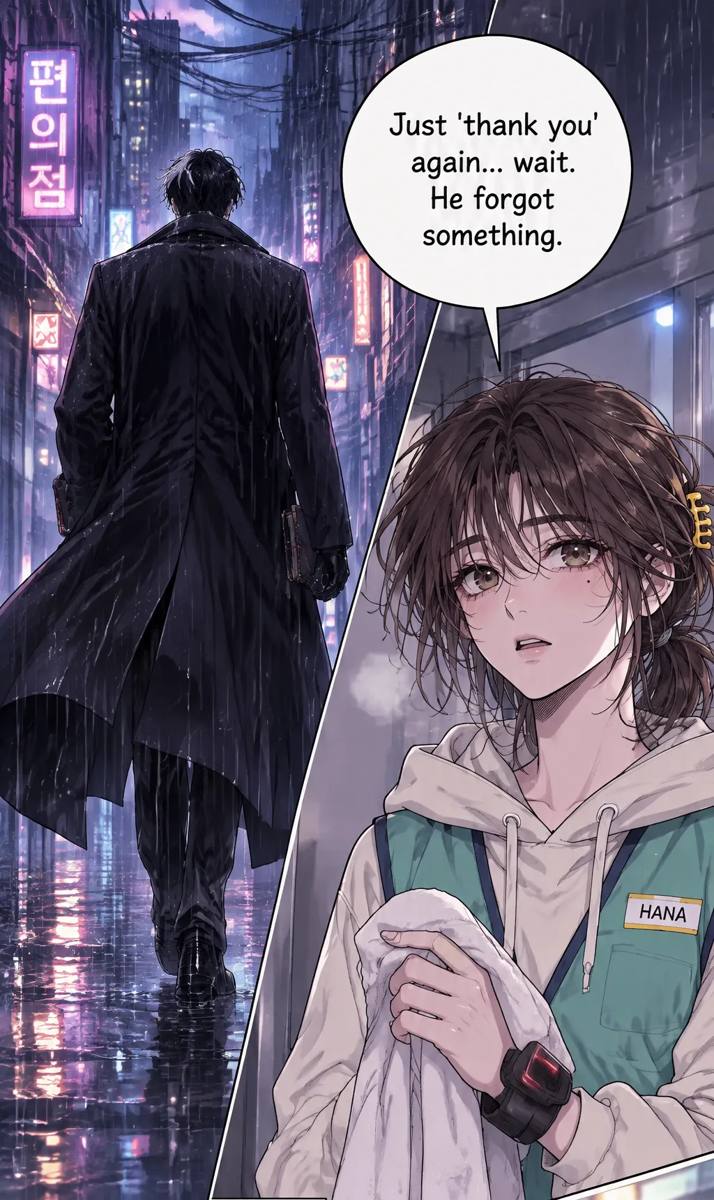
Rain is romance's favourite mood amplifier. It isolates two people from the rest of the world, gives them an excuse to linger, and makes every neon sign bleed into the wet street. The classic version is a shared umbrella; our shelves don't have that exact frame yet, but they do have the next best thing.
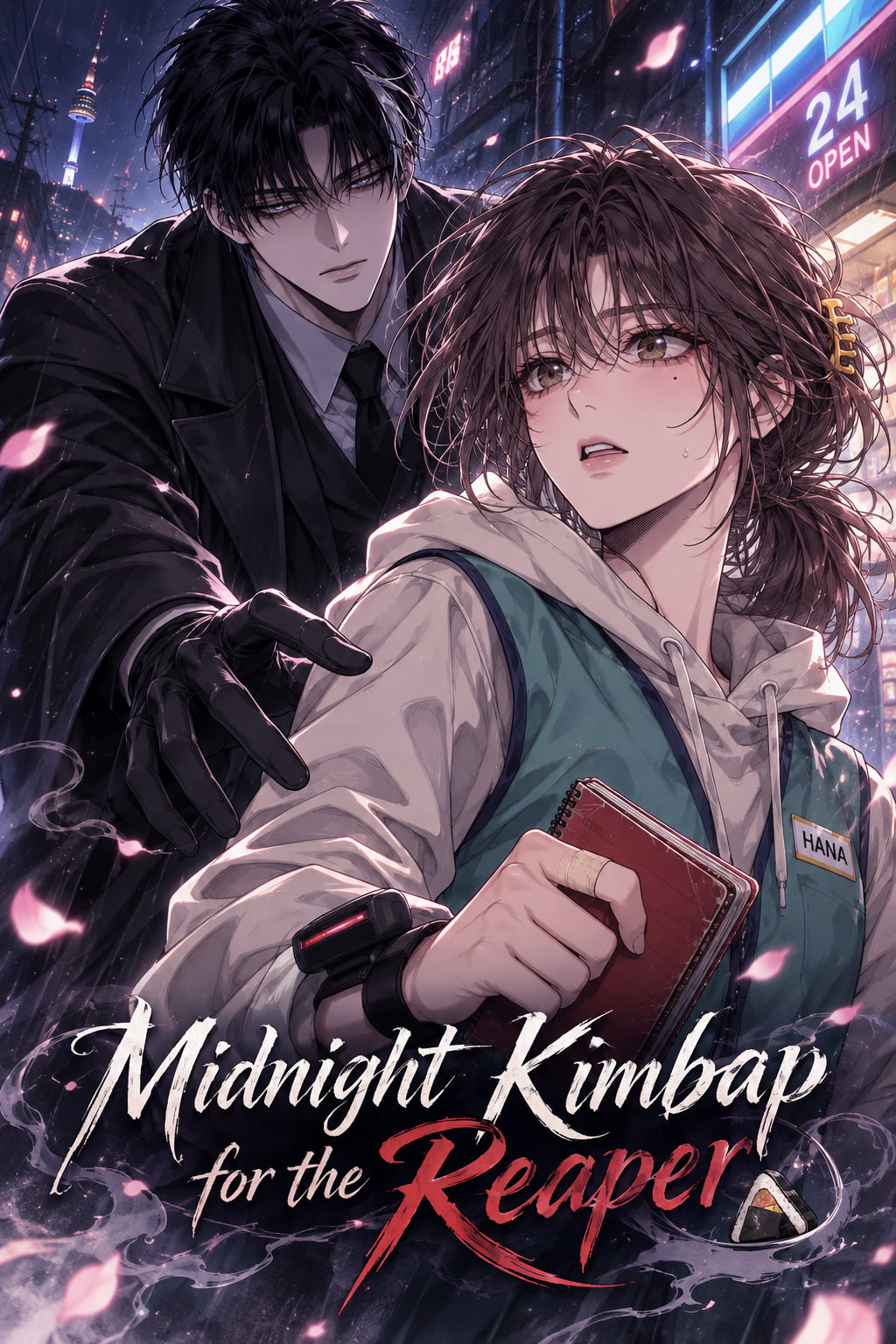
Rain-streaked Seoul, a figure walking away and a clerk holding the towel she offered him. From Midnight Kimbap for the Reaper.
Six months of the same customer, the same tuna-mayo kimbap and the same “thank you.” The downpour turns a routine exit into a scene, and the wet ledger he leaves behind turns it into a plot.
6. Colour temperature shifts
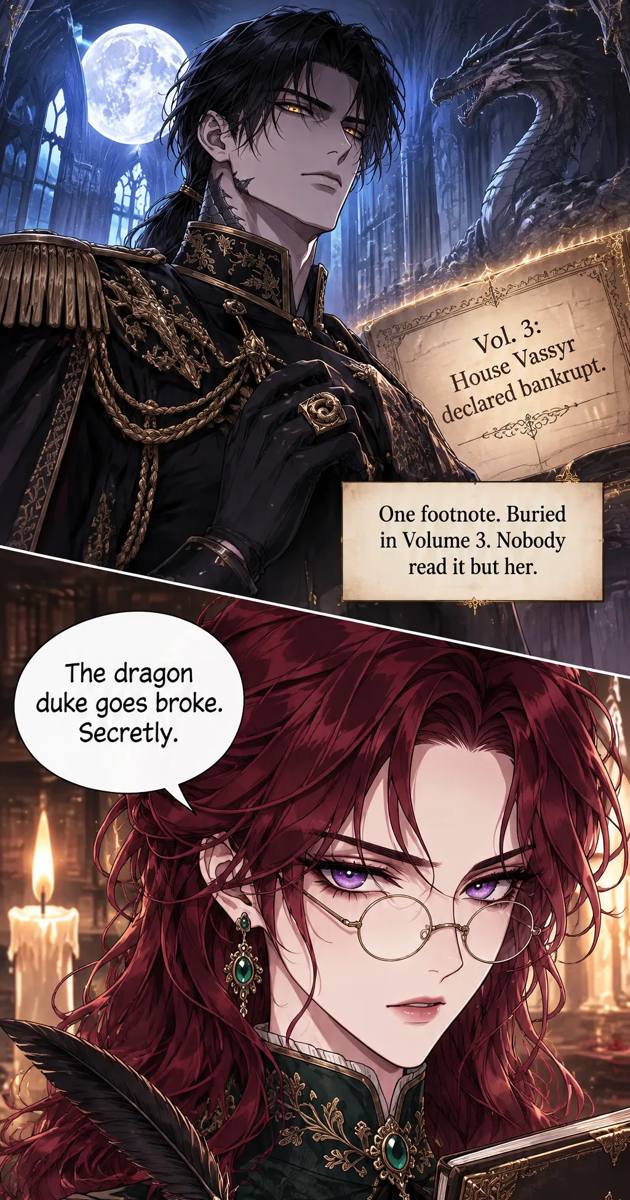
Full-colour vertical comics can do something black-and-white manga can't: change the emotional temperature just by changing the palette. Cold blues read as distance, danger or loneliness. Warm golds read as closeness, memory and safety. Put them side by side and you can feel two people's worlds before they meet. We dig into why scroll comics went full colour in why vertical comics are in colour.
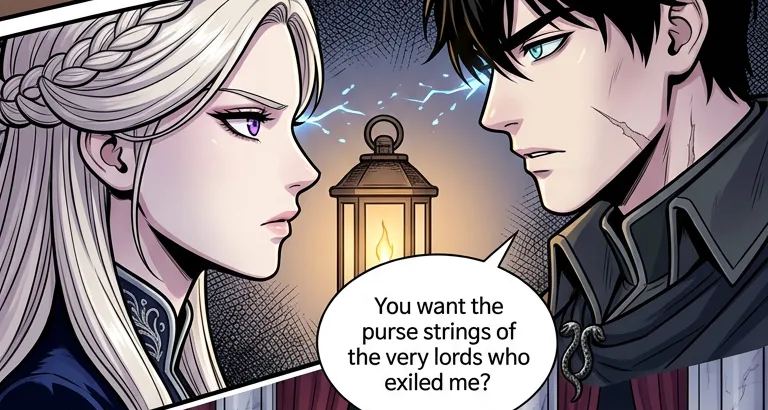
The near-kiss is the most anticipated frame in romance, and the best series make you wait for it. Before the kiss comes its rival cousin: two faces in profile, close enough to touch, neither willing to look away. Comics often add a literal spark between the eyes so you know the tension cuts both ways.
Notice the lantern between them. It is the only warm thing in the panel, sitting exactly where a kiss would be. For more of the moments these frames build toward, see our list of confessions, near-kisses and reunions we love.
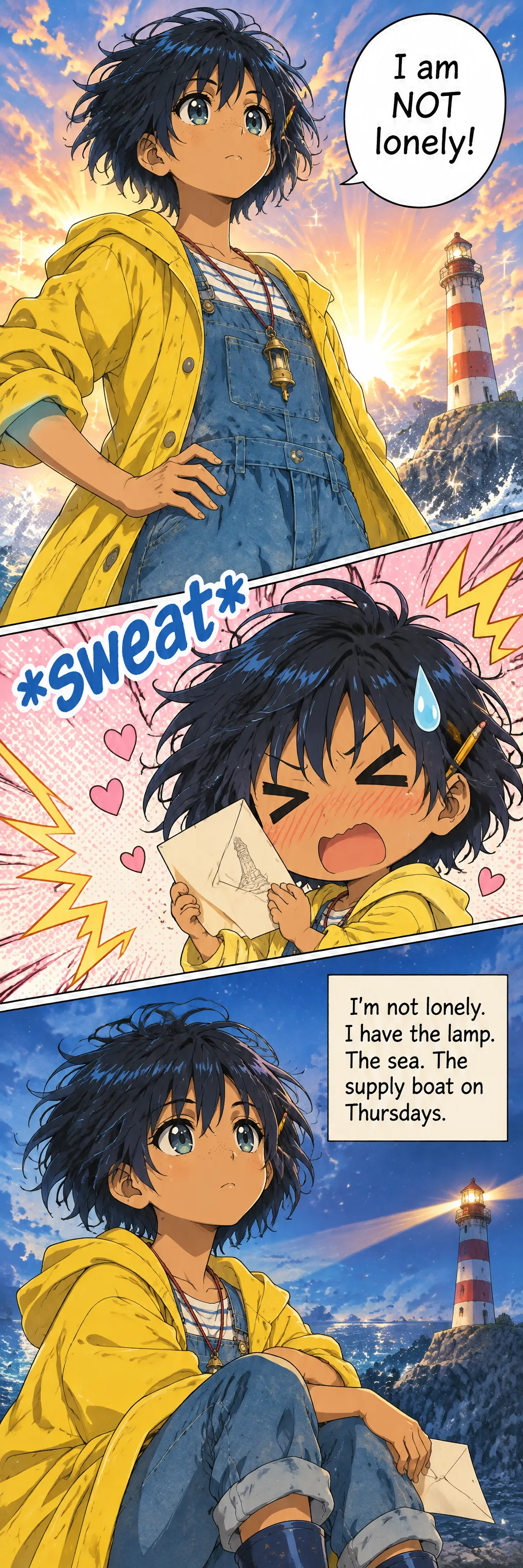
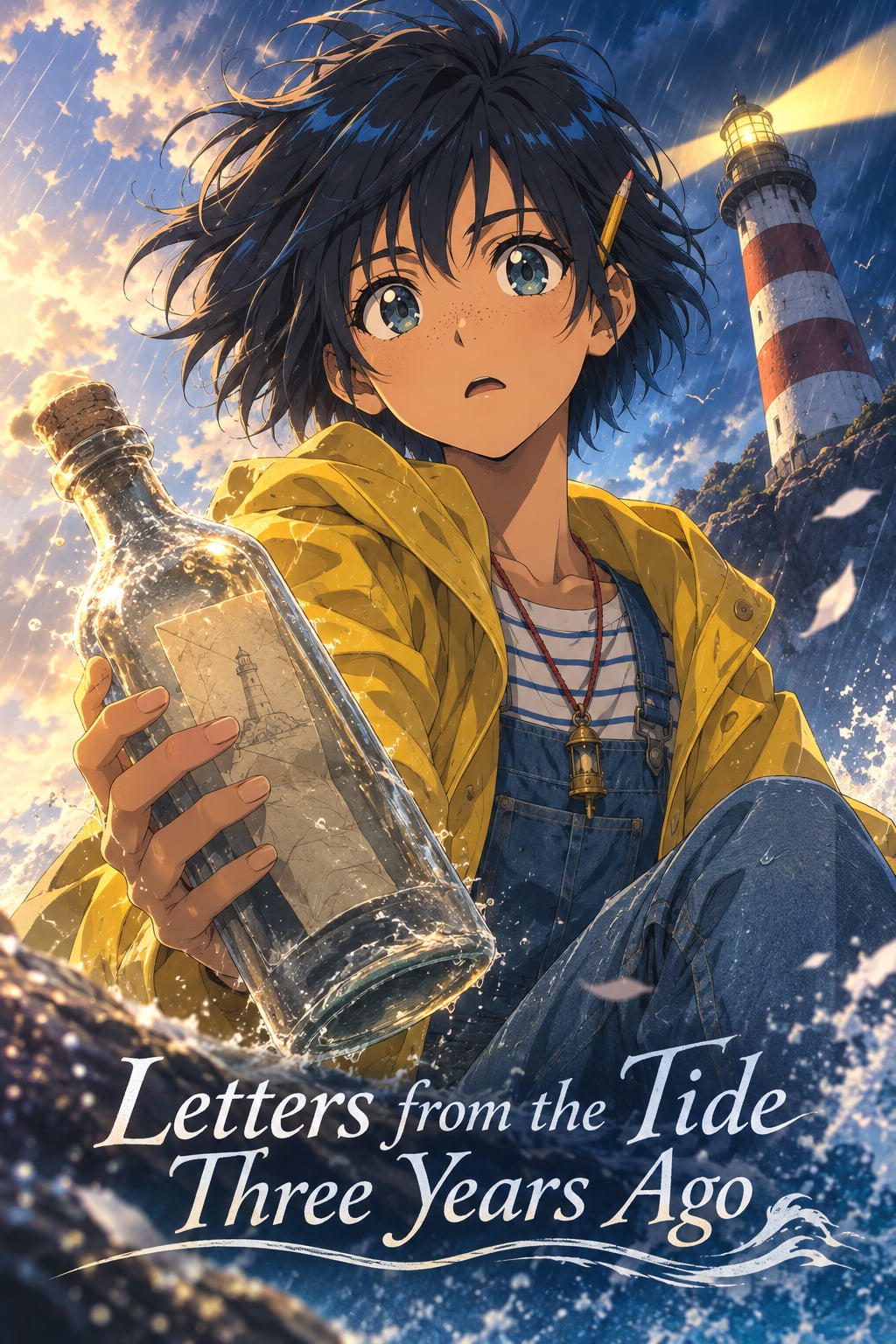
Here's where anime romance gets its rhythm. A single page can swing from heroic to ridiculous and back again, and readers love it because the swing itself is the joke. This page from Letters from the Tide Three Years Ago uses three entries from our glossary in one scroll.
Nagi insists she isn't lonely, and the art disagrees with her twice.
7. Dramatic backlight
The top panel puts the sun right behind Nagi's head: a sunburst, glittering spray and a low camera angle. Backlight makes a character look bigger than life. Here it's used for a declaration, “I am NOT lonely!”, which makes the next panel funnier.
8. The sweat drop
One oversized, pale-blue drop on the side of the head. Nobody is actually sweating; it means “caught out.” It's the most useful mark in comedy romance because it lets a character be embarrassed without a single line of dialogue.
9. The chibi break
Squeezed-shut eyes, a tiny body, pink hearts, red blush hatching and a jagged background: Nagi hugs the letter and briefly becomes a cartoon. The chibi break lets an artist show a feeling too big or too silly for the “real” art style. Then the last panel snaps back to her sitting quietly under the dusk sky while the lighthouse comes on, and the joke turns tender.
“I'm not lonely. I have the lamp. The sea. The supply boat on Thursdays.
▸ Chibi breaks for feelings too big to draw straight
▸ The sweat drop for being caught out
▸ Red blush hatching played for laughs
▸ Backlight set up just to be undercut
How hard each mark hits (our unscientific scale)
Blush lines
92
Instantly readable, in any genre.
Falling petals
85
Peak drama, especially at graduation.
Sparkle background
78
Maximum swoon, minimum subtlety.
Rain
74
Turns any exit into a scene.
Sweat drop
66
Small mark, big laugh.
What we couldn't show (yet)
A couple of classics aren't in our panels so far: the shared umbrella in the rain, and a true lips-almost-touching near-kiss. When they arrive, this glossary gets an update.
Why this shorthand works so well in a vertical scroll#
On a phone, you meet each panel one at a time. That makes visual shorthand even more powerful: a blush or a sweat drop reads in a fraction of a second, before your thumb moves on. The same economy powers action, which is why our guide to anime fight scenes in vertical comics reads like a cousin of this one. Want the story-level tropes that sit on top of the visuals? Head to the romance trope dictionary.
Ten Seconds of Silence
She hears every word ten seconds early. His are the only ones that catch her by surprise.
School Life
Supernatural
Romance
The soft-focus close-up above comes from the last page of episode 1. Read from the start to see how the art makes a girl who is never surprised finally get caught off guard.
What do the lines on anime characters' cheeks mean?
Those short diagonal lines, often over a pink wash, are blush lines. They show embarrassment or attraction, and the more lines and the redder the cheeks, the more flustered the character is.
Why do anime and manhwa characters have sweat drops?
The single oversized sweat drop is comic shorthand for awkwardness or exasperation, not actual sweating. It tells you a character is caught off guard, embarrassed or quietly done with someone else's antics.
Why are there sparkles and flowers behind characters in romance comics?
Sparkles and floral backgrounds come from shoujo manga. They show how one character sees another in that moment: dazzling, idealised and impossible to look away from, so the background turns into pure feeling.
 Trope Explained
 Anime Culture