Grumpy x Sunshine: Why Opposites Attract on the Page
What the grumpy sunshine trope is, why the guarded one and the bright one work so well together, and how color and light show it in two Toonor romances.
One of them scowls at the world. The other one smiles at it anyway. Put them in the same practice room or on the same street and sparks fly. That's the grumpy sunshine trope, and it might be the most reliably delicious pairing in romance comics.
Readers adore it because it promises two pleasures at once: the bright one refusing to give up, and the guarded one slowly, grudgingly, letting the light in. Here's what the trope is, why it works so well, and how two Toonor romances use color and light to show who's who before anyone says a word.
Key takeaways
1Grumpy x sunshine is about temperament: one guarded heart, one open one.
2The payoff is the thaw: the grump softening only for one person.
3Artists sell it with palette: cool grays and blues for the grump, warm gold and pink for the sunshine.
4Two picks to read: Duet of Wrong Notes and Snow in July.
The grumpy sunshine trope pairs a guarded character (cold, prickly, quiet or simply exhausted by people) with a sunshine character who is warm, loud, hopeful and impossible to discourage. It isn't really about mood. It's about defenses. The grump has walls for a reason, and the sunshine is the one person who keeps knocking.
It sits close to other favorites in our romance trope dictionary, and it overlaps a lot with enemies to lovers. The difference: enemies want opposite things, while a grump and a sunshine simply face the world in opposite ways.
Comics are a visual medium, and this trope is pure contrast. Two characters with the same energy blur together in a panel. A grump and a sunshine read instantly, even in a thumbnail: one closed posture, one open; one flat mouth, one huge grin. Every scene between them comes with built-in friction, so even a walk to school feels like a duel.
There's also a deeper reason. The trope is a fantasy about being seen. The grump gets someone who isn't scared off. The sunshine gets someone who notices what the smile is covering. That's why this pairing so often powers a slow-burn romance: walls take time to come down, and readers want to savor every brick.
THAW!
The first time the grump almost smiles is the real confession.
Before the stories, look at how each character first walks on. Notice that the light alone tells you who's who.
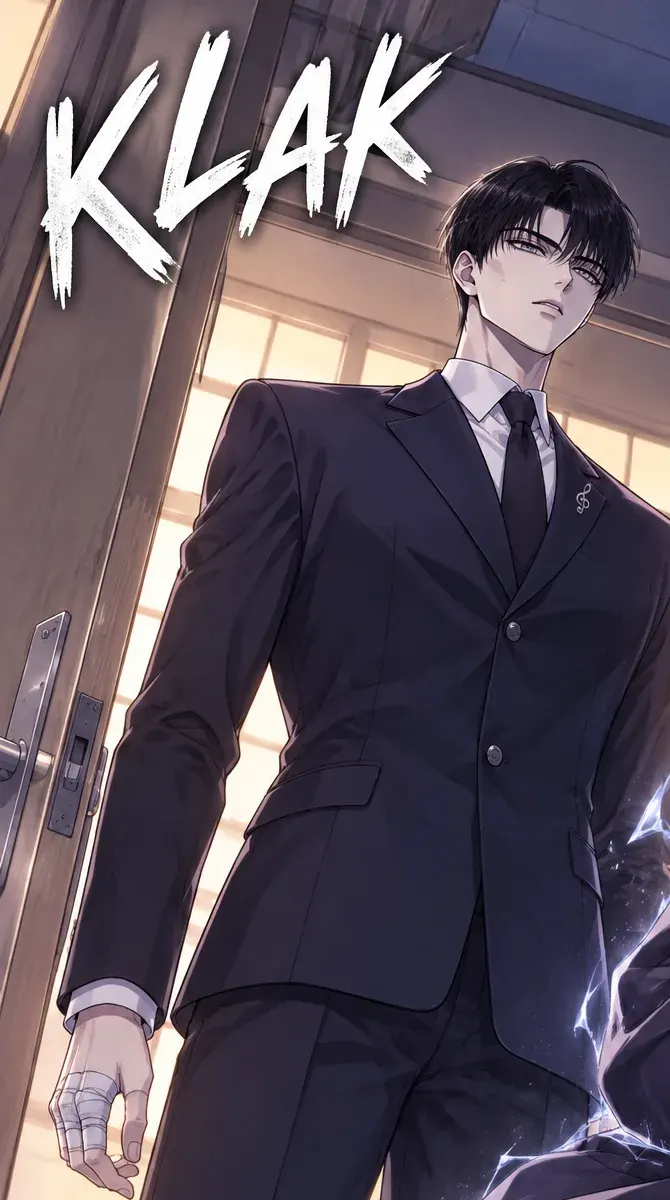
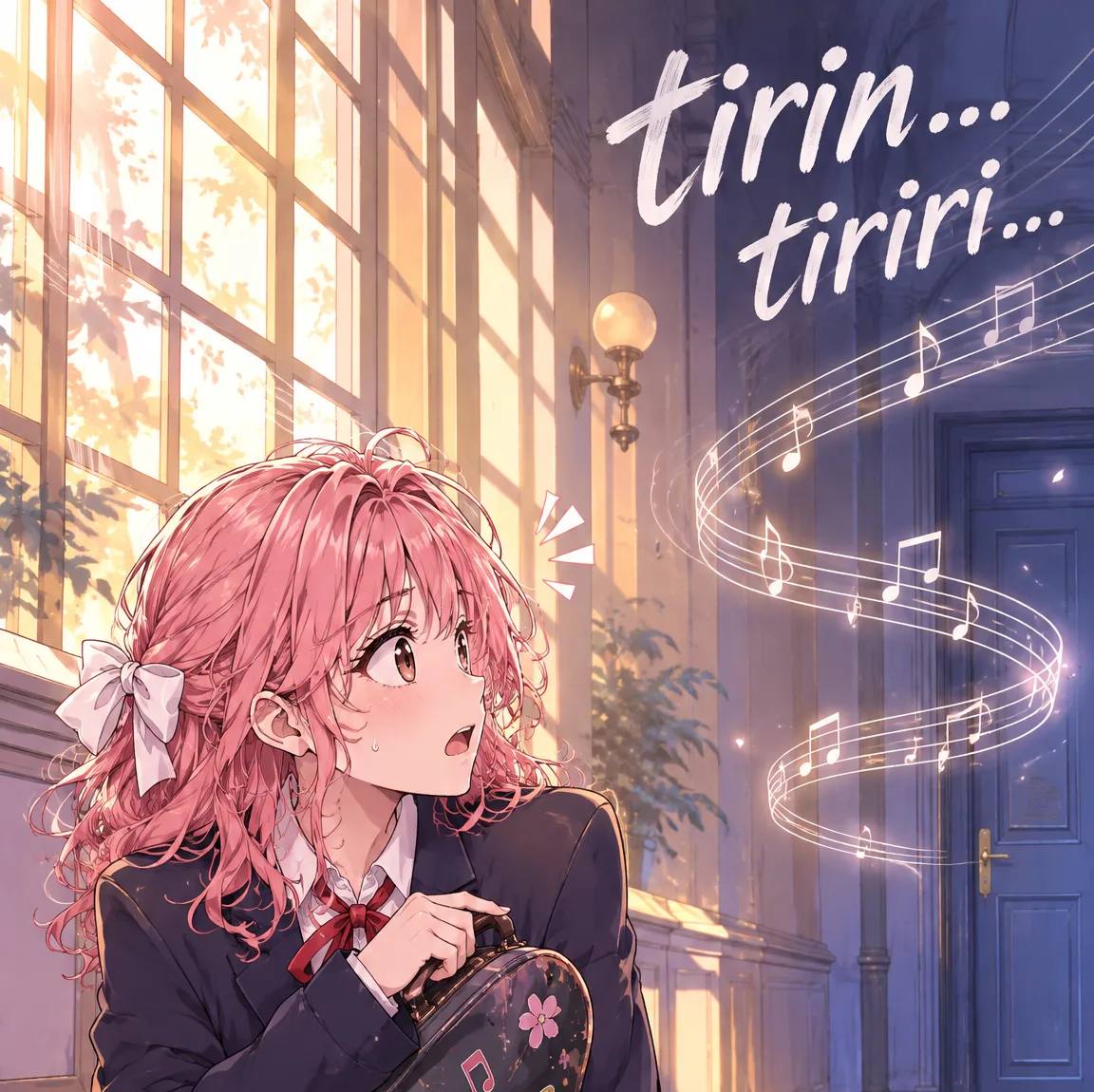
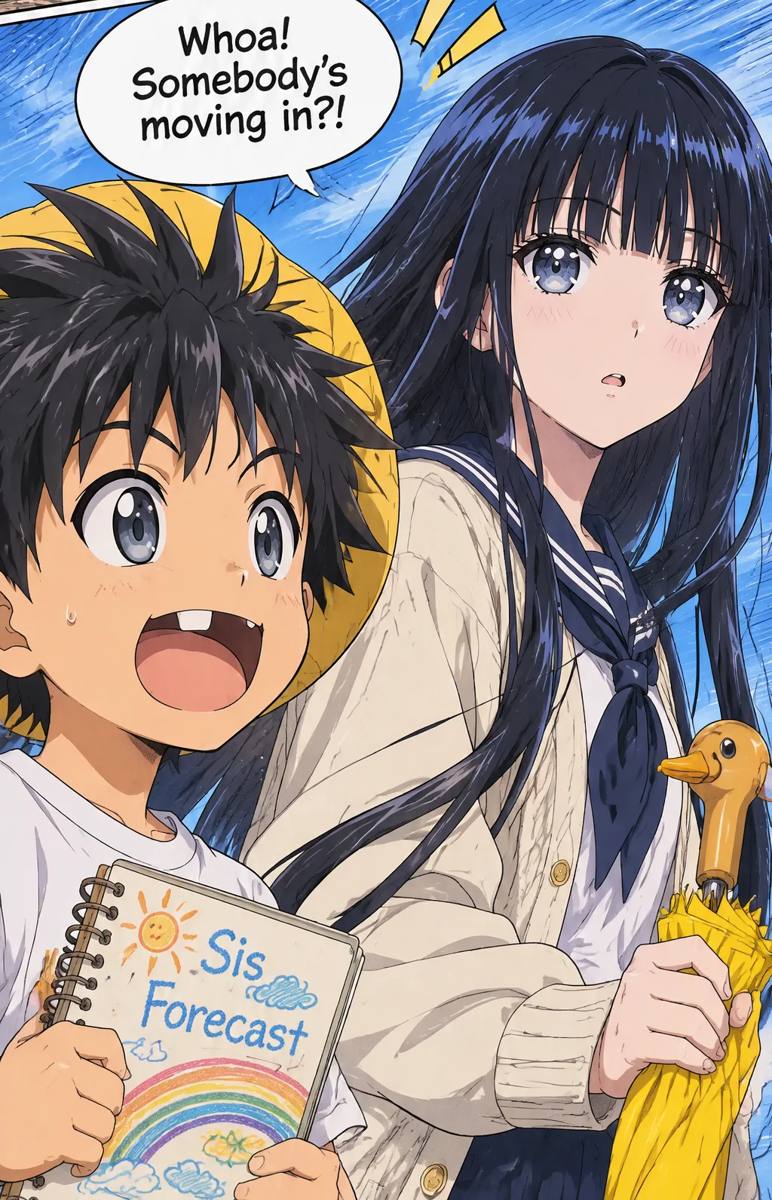
Leon Hayase: icy genius pianistSakura Ono: stubborn fourth-chair violinistSayo Kanda: the guarded oneItsuki Hara: the sunshine boy
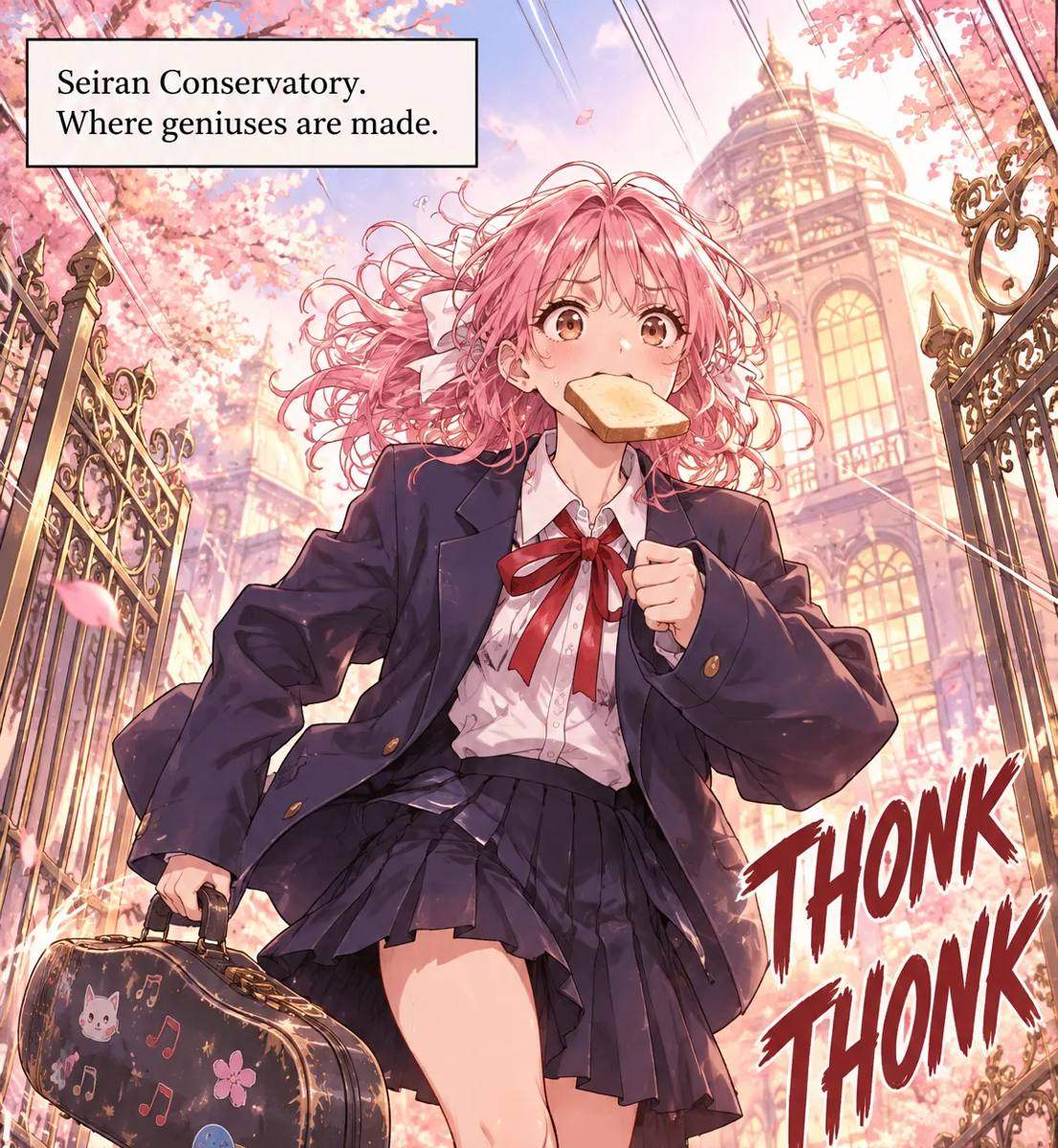
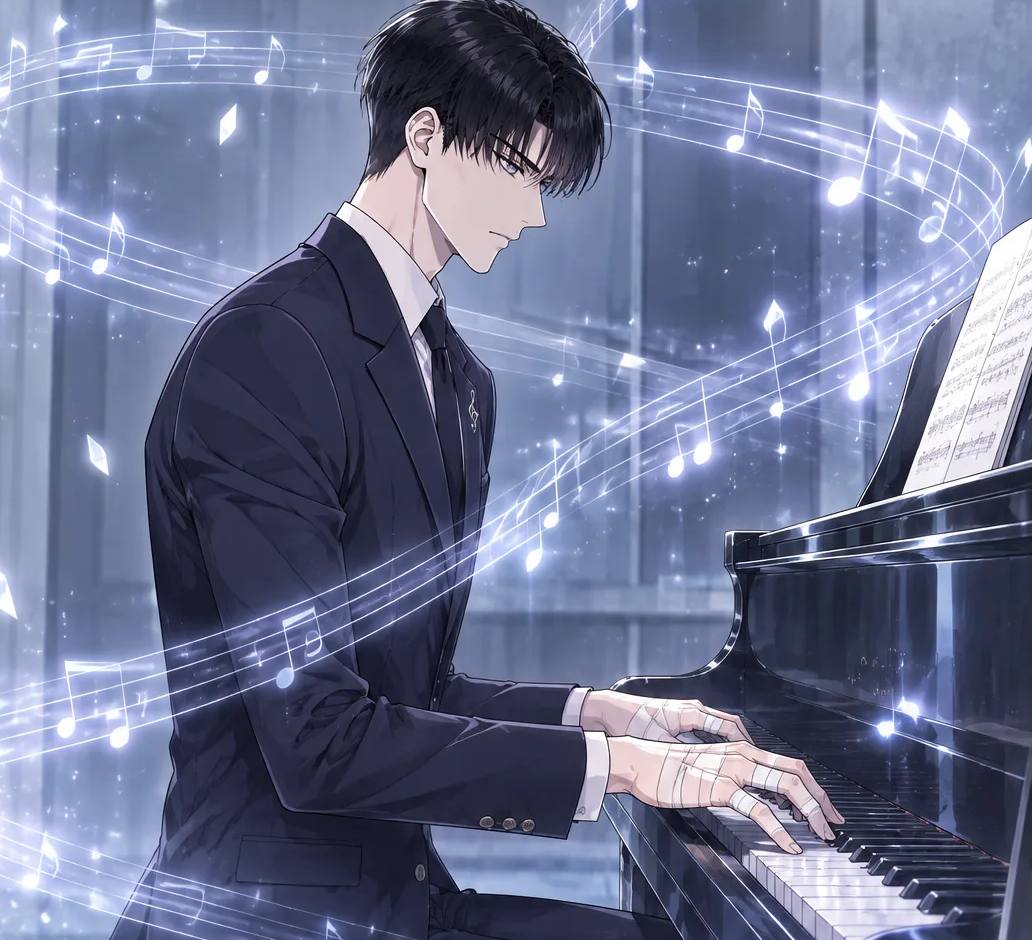
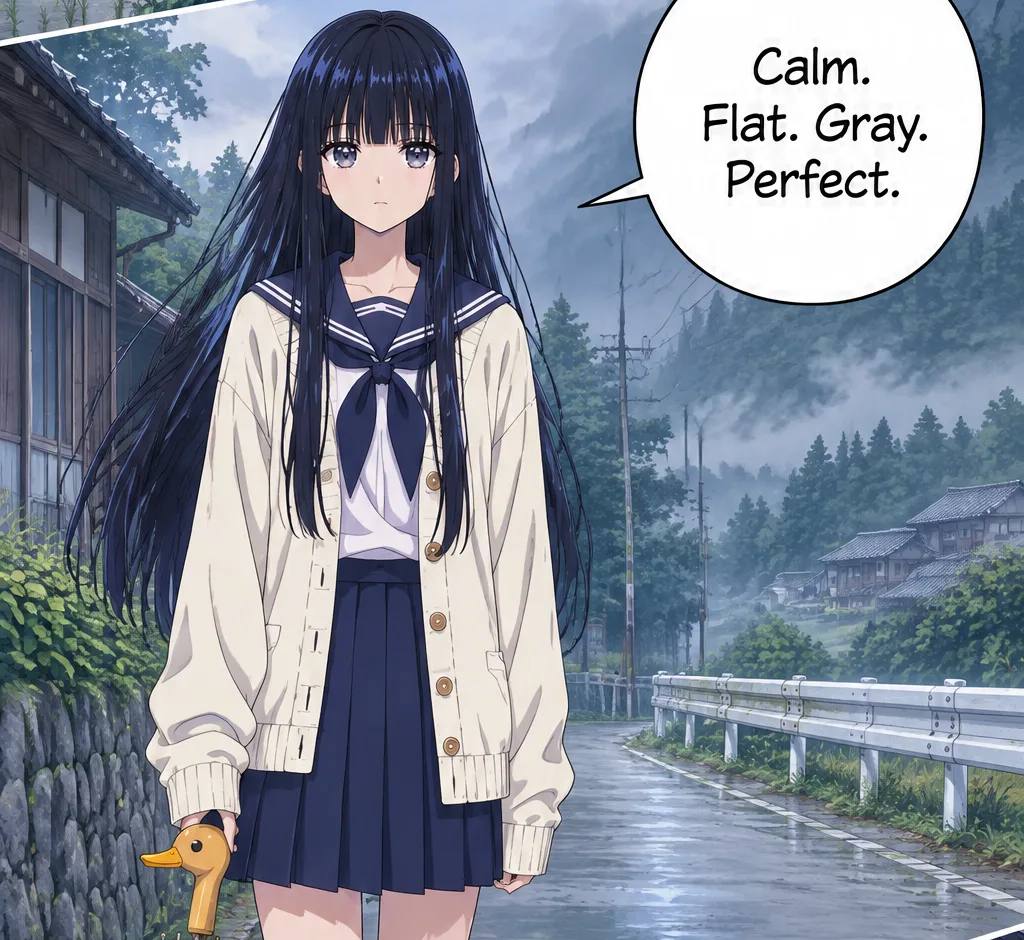
Leon stands in cool shadow, buttoned up to the collar, looking down at the world with a blank face. Sakura gets a sunlit hallway and wide, curious eyes. Sayo stays calm and quiet even with Haru shouting beside her. Itsuki makes his entrance mid-leap, all teeth and freckles under a blue sky.
Alone, she's off-key and he's untouchable. Together, they make music no one can ignore.
Grumpy x Sunshine
Rivals
Music
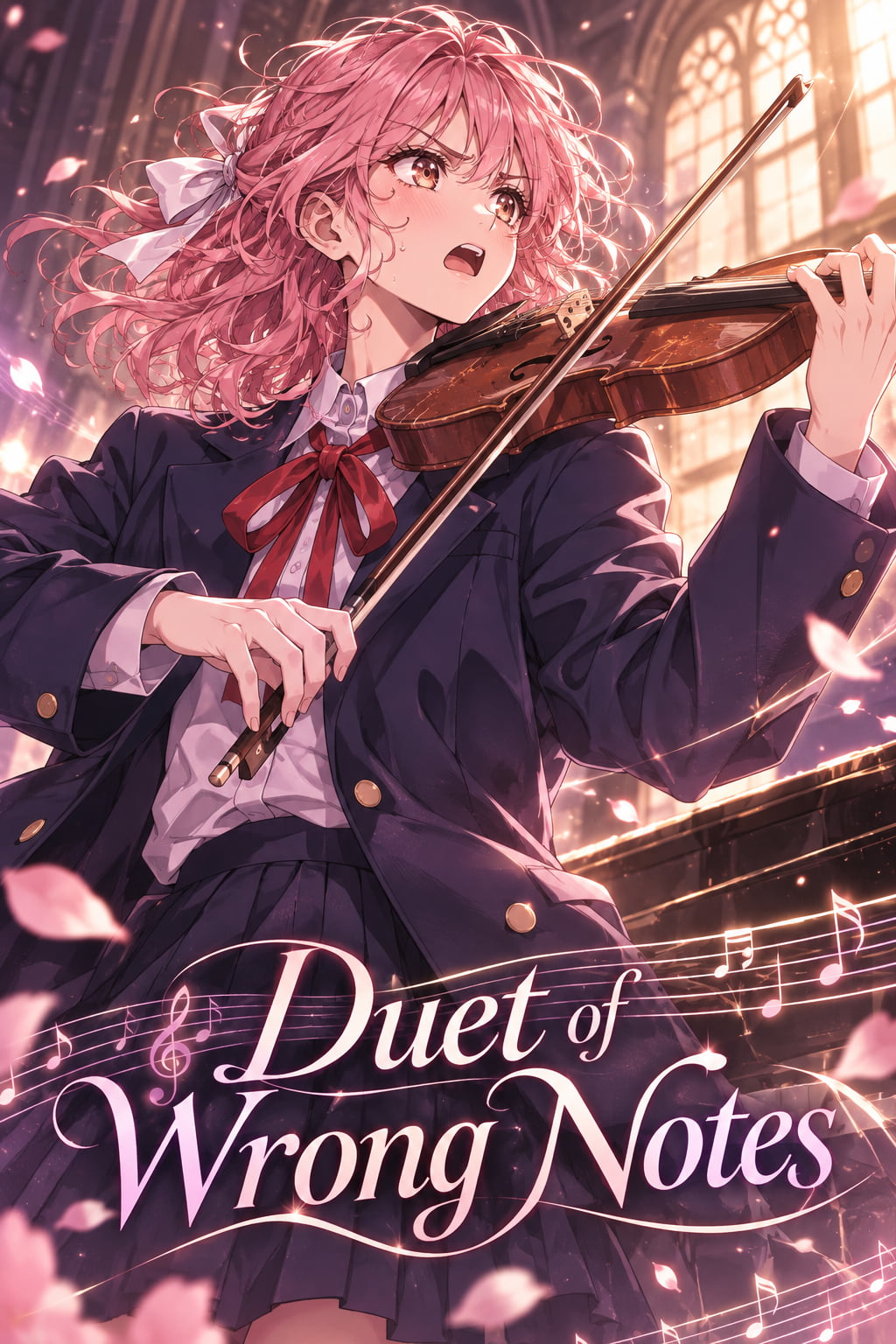
Sakura is the worst violinist at the elite Seiran Conservatory, clinging to fourth chair by sheer stubbornness. Leon is the genius pianist everyone fears. Then their professor pairs them for the national duet competition.
This series is tagged grumpy x sunshine, and episode 1 shows exactly what that means through light. Sakura's opening page is drenched in gold and cherry pink as she sprints through the gates, late again. A few pages later we meet Leon through the glass of a locked practice room, and the whole palette drops into frosty silver-blue.
Sunshine: warm gold, falling petals, toast in mouth.Grump: silver light, a cold room, total solitude.
Note the details. Sakura's violin case is covered in cat, flower and planet stickers. Leon's fingers are wrapped in white tape, a small hint that his perfection costs him something. The synopsis promises a buried reason he plays solo, which is the grump's classic secret.
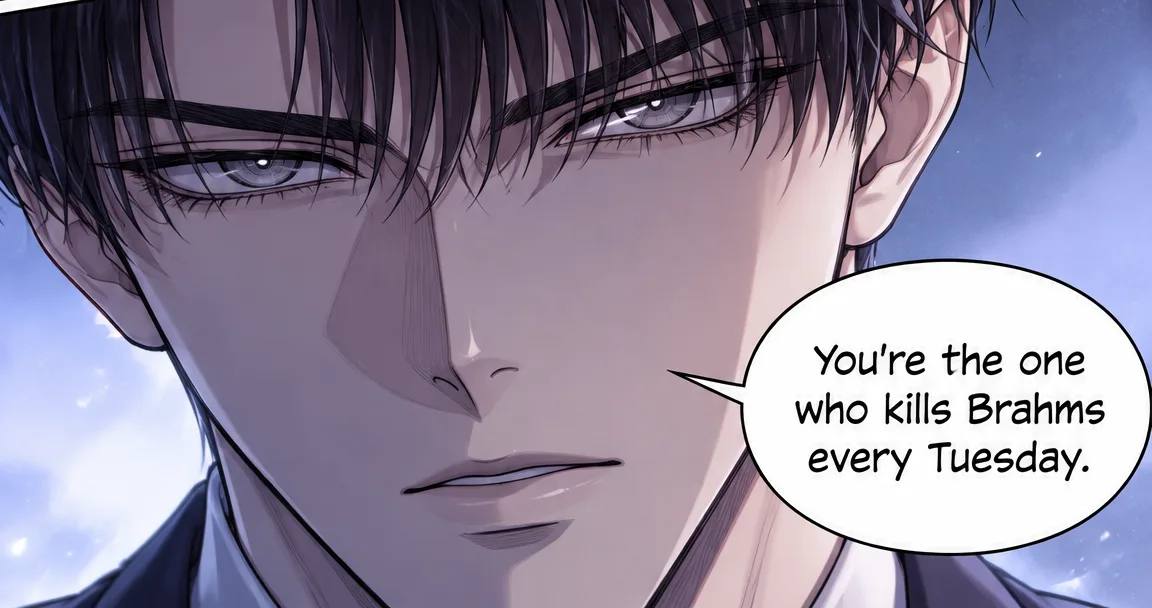
The grump's first line is a weapon. A sunshine heroine doesn't back down.
Sakura OnoExcuse me?! You heartless—
Here's what makes Sakura a great sunshine: she isn't sweet. She's stubborn. The synopsis says Leon thinks she's hopeless and Sakura thinks he's heartless, so their rehearsals become a war of tempos and slammed doors. The sunshine character works best when their warmth has a spine.
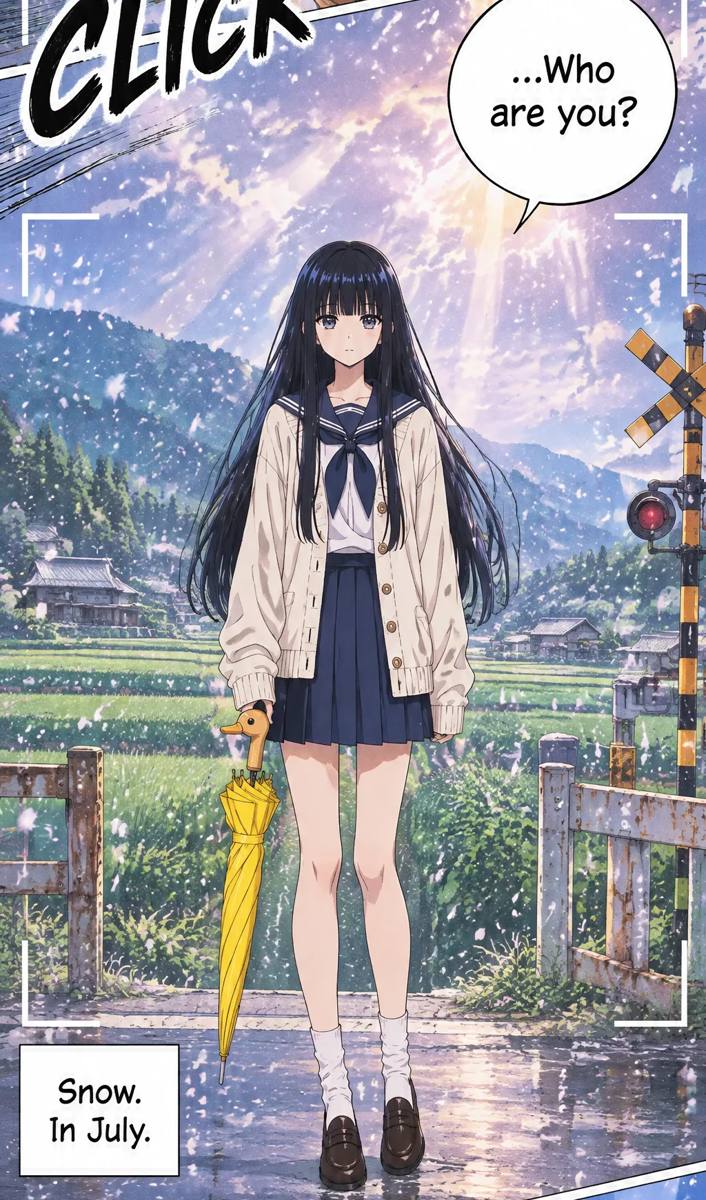
Snow in July: the grump whose heart is the forecast#
Snow in July
Her heart controls the sky. His smile just broke the forecast.
Sunshine Boy
Guarded Heroine
Weather Magic
In the misty town of Kumoyama, the sky mirrors one girl's heart. Sayo has trained herself to feel nothing. Then a sunny storm-chaser moves in next door.
Snow in July flips the usual genders and makes the trope literal. Sayo is the guarded one, and she has a very good reason: joy means sunshine, nerves mean fog, and tears mean storms that flood the valley. Her walls aren't attitude. They're public safety.
Sayo's rule: feel nothing, keep the sky quiet.Itsuki arrives with the actual sun behind him.
Look at the skies. Sayo walks through a gray, misty valley and calls it perfect. Itsuki's introduction is bright blue with sunlight in the corner and sparkles in his eyes. The art literally gives the sunshine boy the weather. The only warm color Sayo allows herself is her bright yellow umbrella, which is a lovely hint that the sunshine is in her too.
Itsuki is a textbook sunshine boy, right down to the costume: a tan, freckles, an ahoge cowlick, an olive rain jacket covered in lightning-bolt and cloud patches, and scuffed red sneakers. He's also relentless in the best way. He moves to Kumoyama determined to prove its impossible weather is real, which puts him on a collision course with the one girl who needs it to stay a secret. Sunshine characters are at their most fun when their cheerful goal threatens the grump's carefully built safety, and this premise bakes that in from page one.
Episode 1's hook: one grin from Itsuki and snow falls on a summer field.
Why this is the trope at its purest
In most grumpy sunshine stories, you have to read the grump's face to see them soften. In Snow in July, the whole town can see it. Every time Itsuki grins at Sayo, the sky gives her away.
Opens with a Brahms insult. Grump energy: maximum.
Sayo Kanda
22
Calm. Flat. Gray. Perfect. (Secretly carries a yellow umbrella.)
Sakura Ono
78
Sunny, but she'll yell back. Stubbornness counts double.
Itsuki Hara
97
His grin is a literal weather event.
Nearby on Toonor
A couple of other series brush against the trope without quite being it. Fake Fiancée Scoreboard pairs energetic rival Kotone with Haru, whose composed, cool expression is designed to crack into a heavy blush when he's flustered, a very grump-like tell. Kei Is Not Programmed for This has a warm, clumsy heroine and a polite android with a practiced smile. Kei isn't grumpy, but if you love watching a composed character glitch for one person, it scratches a similar itch.
It pairs a guarded, prickly or reserved character with a warm, open and relentlessly cheerful one. The story's pleasure comes from watching the bright one wear down the grump's defenses, and from the grump quietly softening only for them.
Is grumpy sunshine the same as enemies to lovers?
Not quite. Enemies to lovers is about opposition, while grumpy sunshine is about temperament. They often overlap, as in Duet of Wrong Notes, where an icy pianist and a stubborn violinist start out openly hostile.
Does the grumpy one have to be the guy?
No. Many favorite pairings flip it. In Snow in July the guarded one is the heroine, Sayo, and the sunshine is the boy next door, Itsuki, a cheerful storm-chasing photographer.

 Anime Culture
 Trope Explained
 Trope Explained